When you notice strange car noises, tech can become your best ally. Smartphone apps can record sounds and analyze frequency spectra, giving you ideas about what’s wrong before visiting a mechanic. Diagnostic tools plugged into your OBD-II port detect error codes and sensor issues, while handheld devices help pinpoint the noise source. Advanced cloud-based data analysis further improves accuracy. Keep exploring to discover how these smart solutions can save you time and money fixing your vehicle.
Key Takeaways
- Smartphone apps analyze engine sounds using frequency spectrum tools to identify potential issues early.
- Diagnostic OBD-II devices retrieve error codes that correlate with specific noise sources.
- Handheld stethoscopes and vibration sensors help pinpoint exact locations of unusual noises during operation.
- Cloud-based data analysis enhances noise diagnosis accuracy by processing sound patterns remotely.
- Combining apps and gadgets enables quick, cost-effective troubleshooting before professional repairs.

If your car starts making strange noises, it’s important to identify the source quickly to prevent potential damage. Modern technology offers a variety of diagnostic tools and apps designed to help you pinpoint the issue with ease. Noises can be tricky to decipher, but with the right tools, you can improve noise identification and determine whether you need professional help or if a simple fix will do.
Identifying car noises quickly helps prevent damage and saves time.
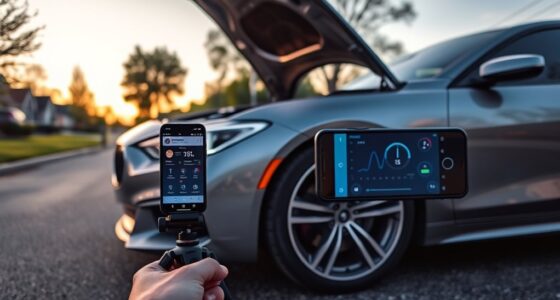
One of the most accessible ways to start is by using smartphone apps that specialize in noise analysis. These apps record the sound and analyze its frequency spectrum, helping you compare it to known vehicle noises. Many of these programs come with sound libraries or community-shared data, making noise identification faster. They’re especially useful if you’re unfamiliar with car mechanics but want a preliminary idea of what might be wrong. Simply hit record, play the noise, and see what the app suggests. It won’t replace a professional diagnosis, but it can save you time and give you peace of mind.
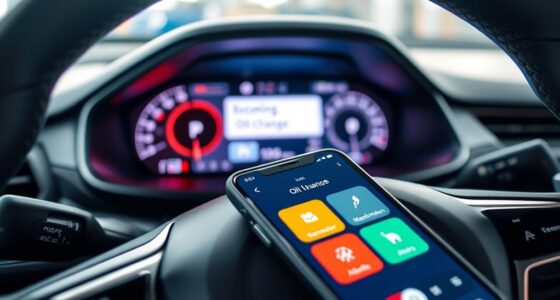
In addition to apps, there are specialized diagnostic tools that connect directly to your vehicle’s OBD-II port. These gadgets scan your car’s electronic systems, retrieving error codes that can point to specific issues causing unusual noises. For example, if a sensor malfunction triggers a noise, these tools can quickly identify the problem by reading the diagnostic trouble codes. They’re compact, user-friendly, and often come with companion apps that display real-time data. Using these tools for noise identification enables you to go beyond just listening — you get concrete data that can guide your next steps.
For more advanced noise detection, consider investing in a handheld stethoscope or a vibration sensor. These gadgets allow you to listen closely to different parts of your engine or drivetrain while the vehicle is running. By isolating the source of the noise, you can determine if it’s coming from the belts, exhaust, transmission, or other components. When paired with diagnostic tools, they offer a comprehensive approach to noise identification, making troubleshooting more precise. Additionally, leveraging innovative European cloud servers for data analysis can enhance the accuracy of diagnostic results, providing you with more reliable insights.
Ultimately, leveraging tech for noise identification empowers you to take control of vehicle issues early on. Whether through smartphone apps or diagnostic gadgets, these tools help you understand what’s going on beneath the hood without immediately rushing to a mechanic. They streamline the process, saving you time and money while ensuring your car stays in good shape. With the right tech, you can turn a frustrating noise into a manageable problem.
Frequently Asked Questions
Can Smartphone Apps Identify All Types of Car Noises Accurately?
Smartphone apps can’t identify all types of car noises with perfect sound accuracy. While many apps are compatible with various devices and can detect common engine or brake sounds, their precision varies. You might get useful insights for typical issues, but complex or subtle noises could be missed or misdiagnosed. Relying solely on these apps isn’t enough; they’re best used as initial troubleshooting tools alongside professional inspection.
Are There Any Safety Risks When Using These Gadgets While Driving?
Using these gadgets while driving can be a bit like juggling, so you should stay aware of potential safety risks. They might cause driver distraction or gadget interference, which could divert your attention from the road. To stay safe, try to use these tools only when parked or during brief stops. Remember, your focus should always be on driving, and tech should support, not distract from, that priority.
How Do I Choose the Best App for Diagnosing Car Sounds?
To pick the best app for diagnosing car sounds, start by comparing costs to find one that fits your budget. Look at user reviews to see how others rate its accuracy and ease of use. Consider apps with features like sound recording and analysis. Choose one that offers clear instructions and good customer support. This way, you’ll find a reliable app that helps identify your car’s mystery noises effectively.
Do These Tech Tools Work With All Vehicle Makes and Models?
Most tech tools work with a wide range of vehicle makes and models, but vehicle compatibility can vary, so always check the app’s compatibility list before downloading. Keep in mind, app accuracy depends on the device and sensor quality; some tools may perform better with certain cars. To guarantee you get reliable results, choose apps known for high accuracy and confirm they support your specific vehicle make and model.
How Reliable Are Consumer-Grade Gadgets Compared to Professional Diagnostics?
Like a vintage radio tuned to the wrong station, consumer-grade gadgets aren’t always reliable compared to professional diagnostics. While they can identify common issues and save you money, they have limitations, especially with complex problems or unique vehicle makes and models. Professional diagnostics use advanced tools and expertise, making them more accurate. So, for serious issues, you’ll want a mechanic’s assessment rather than relying solely on consumer gadgets.
Conclusion
So, next time your car decides to serenade you with mysterious noises, remember you’ve got a high-tech arsenal at your fingertips. With these savvy apps and gadgets, you’re now the Sherlock Holmes of your driveway, solving automotive riddles without breaking a sweat—or your bank. Who knew that a little digital wizardry could turn you into a car whisperer? Now, go forth, decode those noises, and maybe, just maybe, impress your neighbors with your newfound mechanical prowess.