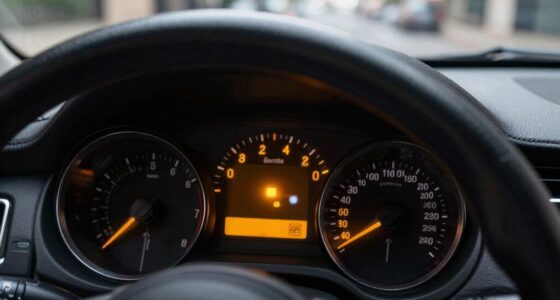
Start by turning off your engine and checking your battery terminals for corrosion, tightness, and cleanliness. Use a multimeter to measure the voltage—around 12.6 volts indicates a healthy battery. Start your car and check the voltage again; it should be between 13.8 to 14.8 volts if your alternator works correctly. Watch for signs like dim lights or warning lights. If you want to learn more about keeping your system in top shape, keep going.
Key Takeaways
- Measure battery voltage with a multimeter; it should be around 12.6V when the engine is off.
- Start the vehicle and check voltage; it should be between 13.8V and 14.8V with the engine running.
- Inspect the drive belt for wear, looseness, or damage to ensure proper alternator operation.
- Examine electrical connections and terminals for corrosion or looseness.
- Watch for warning lights on the dashboard, like the battery or alternator alert.
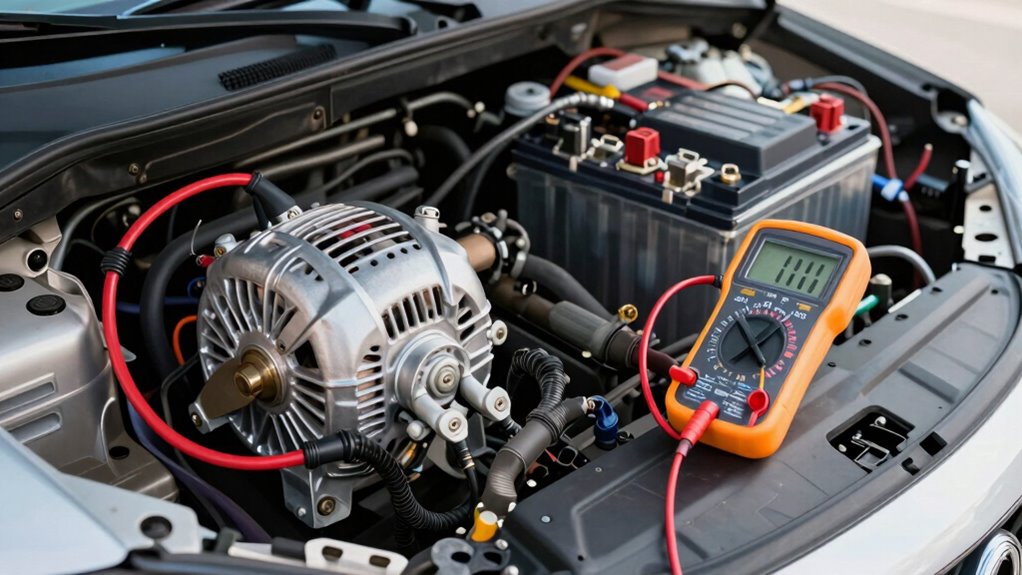
Your vehicle’s charging system is essential for keeping your battery charged and your electrical components working properly. If your car starts to show signs of electrical issues, it’s time to check whether your charging system is functioning correctly. One of the first steps is to assess your battery’s health through proper battery maintenance. A weakened or failing battery can mimic charging system problems, so verify your battery terminals are clean, tight, and free of corrosion. Use a battery tester or multimeter to check the voltage; a healthy, fully charged battery should read around 12.6 volts when the engine is off. If the voltage is notably lower, your battery might need replacing or recharging before proceeding with further diagnostics.
Check your battery terminals and voltage to prevent electrical issues and ensure your vehicle’s charging system functions properly.
Next, you’ll want to focus on alternator diagnostics. The alternator is responsible for generating electricity and charging the battery while your engine runs. Start your vehicle and observe the voltage reading on your multimeter placed across the battery terminals. A properly functioning alternator typically produces between 13.8 and 14.8 volts. If the voltage is below this range, it could indicate the alternator isn’t charging the battery effectively. Conversely, if it exceeds this range, your alternator might be overcharging, which can damage your vehicle’s electrical system. Keep in mind that some fluctuation is normal, but consistent readings outside these parameters suggest an issue.
While testing the voltage, pay attention to warning signs like dimming headlights, a dashboard battery light, or frequent electrical failures. These symptoms often point to alternator problems. If you suspect issues, perform a load test or have an auto technician run an alternator diagnostic to pinpoint the fault precisely. Sometimes, the problem isn’t with the alternator itself but with its accessories, such as the drive belt, connections, or voltage regulator. Inspect these components for signs of wear, looseness, or damage. A slipping or broken belt can prevent the alternator from spinning properly, leading to inadequate charging. Additionally, understanding the role of the alternator helps in diagnosing and maintaining your vehicle’s electrical health effectively. Regular inspections of the drive belt and other components can prevent potential failures before they leave you stranded. Checking the battery’s lifespan and ensuring all connections are secure can also help maintain optimal performance of your charging system.
Furthermore, staying aware of signs of alternator failure can help you address issues early and avoid unexpected breakdowns. Regularly checking your battery’s condition and voltage levels helps catch potential issues early. In some cases, battery lifespan can be extended through proper care, reducing the need for premature replacements. If you notice persistent electrical problems, it’s best to consult a professional who can perform thorough diagnostics. By staying proactive, you minimize the risk of unexpected breakdowns and extend the lifespan of your vehicle’s charging system.

ANCEL BA101 Car Battery Tester, 12V Digital Automotive Alternator Meter Diagnostic Tool,100-2000 CCA Load Capacity, Charging & Cranking Analyzer for Truck, Boat, RV, Marine Vehicle, and More
- Early Battery Problem Detection: Identifies issues before breakdowns
- Comprehensive Battery Insights: Displays SOH, SOC, voltage, CCA
- Reliable Results: High-quality clips and smart chip
As an affiliate, we earn on qualifying purchases.
As an affiliate, we earn on qualifying purchases.
Frequently Asked Questions
How Often Should I Have My Charging System Inspected Professionally?
You should have your charging system inspected professionally at least once a year or if you notice signs like dim lights or a dead battery. Regular battery maintenance helps catch issues early, and an alternator replacement might be necessary if it’s failing. Staying proactive guarantees your vehicle’s electrical system stays in good shape, preventing unexpected breakdowns and extending the lifespan of your battery and alternator.
Can a Faulty Alternator Cause Other Electrical Issues in My Vehicle?
Ever wondered if a faulty alternator could mess with your car’s electrical system? It definitely can. A failing alternator not only shortens its lifespan but also causes voltage fluctuations that can damage other electrical components. Regular electrical system diagnostics help catch issues early. When your alternator malfunctions, you might experience dimming lights, sluggish electronics, or even battery drain—so don’t ignore these warning signs to prevent further electrical problems.
What Are the Signs of a Failing Battery Related to the Charging System?
If your battery shows signs of failing, look for corrosion on the terminals, which can hinder proper charging. You might notice dimming headlights, an alternator warning light, or difficulty starting your vehicle. These signs indicate your charging system isn’t functioning correctly, possibly due to a failing battery or alternator issues. Addressing corrosion promptly and having your charging system tested can prevent breakdowns and keep your vehicle running smoothly.
Does Extreme Weather Affect the Performance of My Charging System?
Did you know extreme weather can reduce your car’s battery life by up to 50%? Weather impact markedly affects your charging system; cold temperatures slow chemical reactions, making it harder to start your engine, while heat accelerates battery fluid evaporation. Proper battery maintenance becomes essential in such conditions. Protect your vehicle by checking the charging system regularly, especially during extreme weather, to prevent unexpected breakdowns and guarantee reliable starts.
Are There Any DIY Tools Recommended for Testing My Vehicle’s Charging System?
For DIY testing your vehicle’s charging system, you can use basic charging tools like a multimeter to check the battery voltage and alternator output. A multimeter is essential for accurate results, helping you identify if your system produces around 13.8 to 14.4 volts when the engine runs. You might also consider a dedicated battery tester or a portable voltage tester to simplify the process and verify your charging system functions properly.
ANCEL BA101 Car Battery Tester, 12V Digital Automotive Alternator Meter Diagnostic Tool,100-2000 CCA Load Capacity, Charging & Cranking Analyzer for Truck, Boat, RV, Marine Vehicle, and More
- Early Battery Problem Detection: Identifies issues before breakdowns
- Comprehensive Battery Insights: Displays SOH, SOC, voltage, CCA
- Reliable Results: High-quality clips and smart chip
As an affiliate, we earn on qualifying purchases.
As an affiliate, we earn on qualifying purchases.
Conclusion
Now that you’ve learned how to test your charging system, imagine hitting the road, confident that your vehicle’s power is steady. But what if, just as the engine hums smoothly, a flicker of doubt appears—a warning sign lurking beneath the surface? Keep an eye on those gauges and listen for strange noises. The road ahead is full of surprises; staying vigilant guarantees your journey stays smooth and safe, no matter what comes next.
ANCEL BA101 Car Battery Tester, 12V Digital Automotive Alternator Meter Diagnostic Tool,100-2000 CCA Load Capacity, Charging & Cranking Analyzer for Truck, Boat, RV, Marine Vehicle, and More
- Early Battery Problem Detection: Identifies issues before breakdowns
- Comprehensive Battery Insights: Displays SOH, SOC, voltage, CCA
- Reliable Results: High-quality clips and smart chip
As an affiliate, we earn on qualifying purchases.
As an affiliate, we earn on qualifying purchases.

CRC 05023 Battery Cleaner with Acid Indicator – 11 Wt Oz.
- Suitable for fleet maintenance: Fleet and vehicle maintenance use
- Brand: Crc
- Country of origin: Made in the United States
As an affiliate, we earn on qualifying purchases.
As an affiliate, we earn on qualifying purchases.