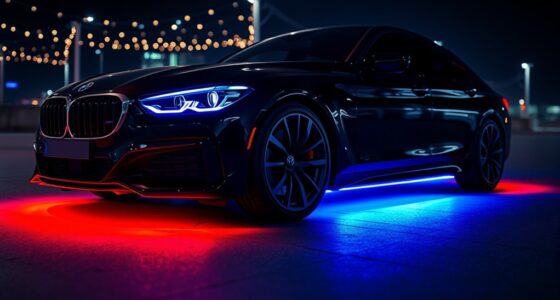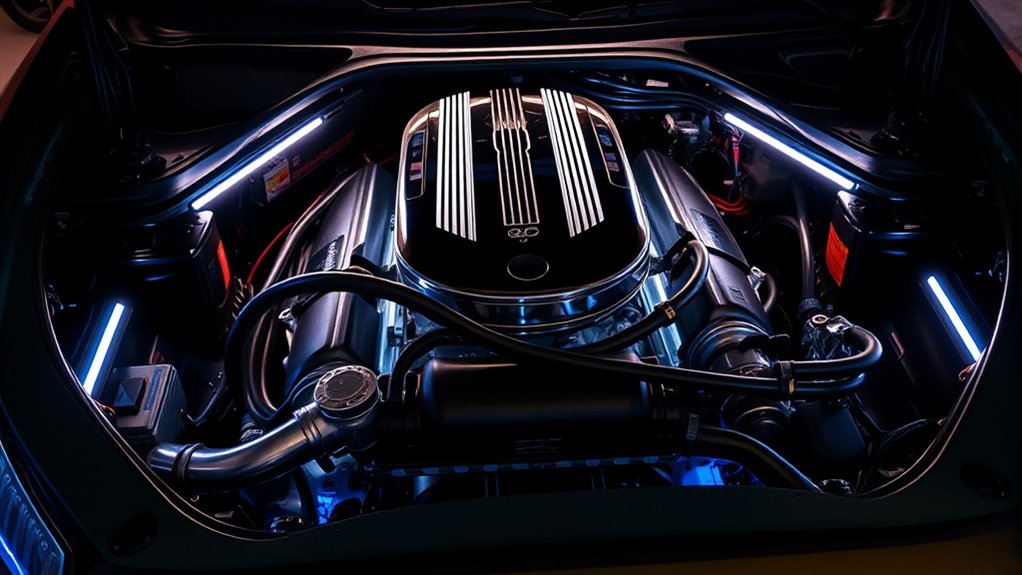

Installing LEDs under your hood is an easy way to brighten your engine bay and improve visibility for maintenance and troubleshooting. Start by disconnecting your battery, plan your wiring route carefully to avoid heat and moving parts, and use high-quality, weatherproof wiring. Secure the LEDs with a relay, connect to a power source that activates with the hood, and make sure all connections are solid. To find out more about creating a stylish, bright, and safer engine compartment, keep exploring how to set it all up effectively.
Key Takeaways
- Plan your wiring route carefully, avoiding heat sources and moving parts for a safe, effective LED installation.
- Use high-quality, weatherproof wiring and connect LEDs to a power source that activates when the hood opens.
- Install a relay to handle the load, ensuring stable brightness and preventing voltage drops.
- Secure all connections with quick-connects or soldered joints with heat shrink for durability and safety.
- Test the LED lights before final assembly, then tidy up wiring and reassemble the engine bay for a clean look.

Ever wondered how mechanics quickly identify issues under the hood? It’s because they rely on good lighting that reveals every detail clearly. Installing under-hood illumination with LEDs is a smart way to improve visibility, making repairs and inspections faster and safer. When choosing LEDs, you’ll find a variety of LED color options, from cool white to vibrant colors like red, blue, or green. These options not only brighten up your engine bay but also allow you to customize your vehicle’s look. Bright white LEDs are most popular for their clarity, mimicking daylight and providing the best visibility. However, if you want a touch of personality or prefer a softer glow, colored LEDs can add style and function. Just keep in mind that some colors may affect how easily you see certain engine components, so select wisely based on your needs.
When it comes to wiring installation tips, proper setup is key for a safe and durable under-hood lighting system. Start by disconnecting your vehicle’s battery to avoid any electrical mishaps. Plan your wiring route carefully, avoiding areas with high heat, moving parts, or sharp edges that could damage the wires over time. Using high-quality wiring is essential; look for insulated, weatherproof cables designed for automotive use. You’ll want to connect the LEDs to a power source that turns on when you open the hood, typically tapping into the dome light circuit or installing a dedicated switch. Use quick-connect clips or solder joints with heat shrink tubing to guarantee reliable, corrosion-resistant connections. When wiring multiple LEDs, consider installing a relay to handle the load and prevent voltage drops that could dim your lights. Keep the wiring tidy by securing it with zip ties or clips, and route it away from hot surfaces to prevent melting or deterioration. Additionally, understanding basic electrical safety practices is crucial to prevent damage to your vehicle and ensure your own safety during installation.
Once your wiring is in place, test the LEDs before finalizing everything. Make sure they turn on and off as expected and that all connections are solid. If you notice flickering or dimming, double-check your wiring and connections. Proper wiring installation tips also include grounding the LEDs securely to a metal part of the vehicle chassis, which guarantees a stable current flow. After testing, neatly tuck away any excess wiring and reassemble your engine bay. With the right LED color options and a careful wiring setup, you’ll enjoy a brighter, more functional engine compartment that looks sharp and helps you spot issues faster. Under-hood LED lighting isn’t just about style — it’s about making your vehicle more practical and easier to work on whenever needed.
Frequently Asked Questions
Can LED Lighting Damage My Vehicle’s Electronics?
LED lighting typically won’t damage your vehicle’s electronics if you choose the right products. Make sure the LEDs are compatible with your battery and electrical system to prevent issues. Poor quality or incompatible LEDs can cause electrical interference or drain your battery faster. To stay safe, use high-quality LEDs designed for automotive use, and consider installing a resistor or fuse if needed. This helps protect your electronics and keeps your lighting system functioning smoothly.
What Is the Best Color for Engine Bay LEDS?
Imagine your engine bay as a canvas awaiting your artistic touch. The best color for LEDs depends on your aesthetic goals—bright whites reveal every detail, while vibrant blues or reds add a dramatic flair. Consider color options that complement your vehicle’s style and mood. For a sleek, modern look, cool tones work well, but if you want to make a statement, bold colors can turn your engine bay into a visual masterpiece.
How Long Do LED Lights Typically Last?
LED lights typically last around 25,000 to 50,000 hours, giving you a long lifetime expectancy with minimal maintenance. To guarantee they stay bright longer, avoid exposure to excessive heat and moisture, and check connections regularly. Proper installation and gentle cleaning help prevent damage, so you get the most out of your LEDs. With proper care, your under-hood LEDs will keep illuminating your engine bay for years to come.
Are There Any Legal Restrictions on Under-Hood Lighting?
Think of under-hood lighting like a lighthouse guiding you safely—some areas have legal restrictions to prevent distractions or impairing visibility. Laws vary by state, focusing on safety considerations, such as avoiding colors or flashing patterns that could confuse other drivers. Before installing LEDs, check local regulations; for example, some places prohibit certain colors or brightness levels. Staying compliant guarantees your upgrade keeps your vehicle safe and legal on the road.
How Do I Troubleshoot LED Lighting Issues?
To troubleshoot LED lighting issues, start by checking your power supply to guarantee it’s providing consistent voltage. Next, inspect your wiring connections for looseness, corrosion, or damage, as faulty connections can cause flickering or failure. Test the LEDs with a multimeter or replace them temporarily to see if they’re functioning. Confirm your switch and fuse are working properly, and make sure all wiring is secure for reliable operation.
Conclusion
Now that you’ve installed LEDs to light up your engine bay, you’ve truly lit a fire under your car’s look. With better visibility and a sleek upgrade, you’re all set to tackle those nighttime fixes with confidence. Remember, a little shine goes a long way—it’s the cherry on top of your ride’s upgrade. So, keep your engine bay bright and your skills sharper; after all, a well-lit engine is a happy engine!