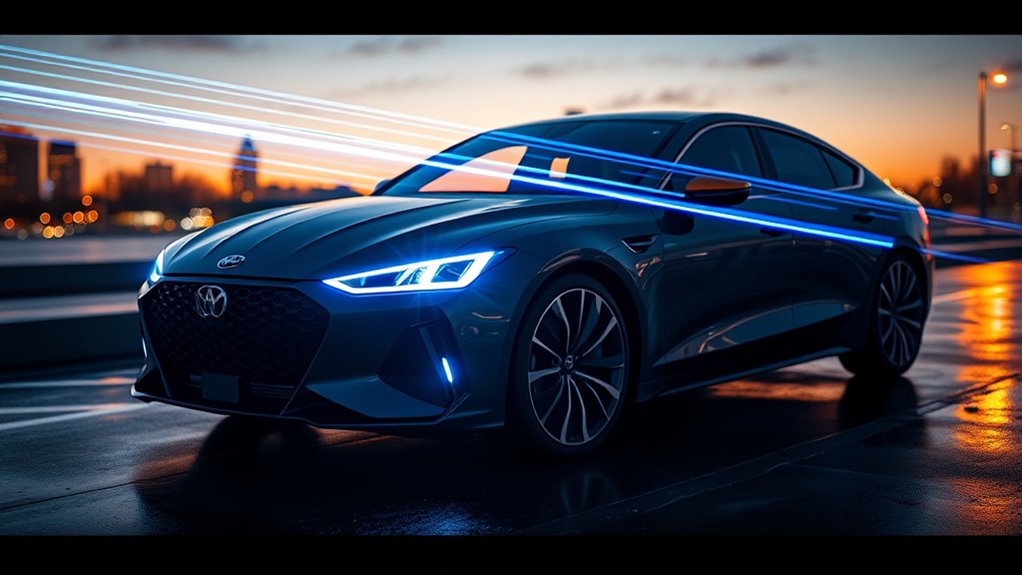

Laser headlights are a genuine future tech that’s transforming vehicle lighting with brighter, more energy-efficient, and adaptable illumination. They work seamlessly with autonomous systems to enhance safety and visibility in all conditions, especially for electric vehicles. While they may seem like hype now, their benefits—longer lifespan, lower power use, and improved performance—point to widespread adoption ahead. Stick around if you want to explore how laser headlights are shaping automotive innovation.

Get business pricing on garage and car supplies
- Business-only prices and quantity discounts
- Tax-exempt purchasing
- Multiple users, one account, clear invoices
Key Takeaways
- Laser headlights offer brighter, more energy-efficient illumination compared to traditional systems, indicating genuine technological advancement.
- They integrate seamlessly with autonomous vehicle sensors, enhancing safety and obstacle detection in real-world conditions.
- Their superior energy efficiency benefits electric vehicles by reducing power consumption and extending driving range.
- Despite higher initial costs, their durability and low maintenance suggest practical long-term value rather than hype.
- Industry trends show laser headlights are becoming standard in future vehicle models, confirming their role as a significant automotive innovation.
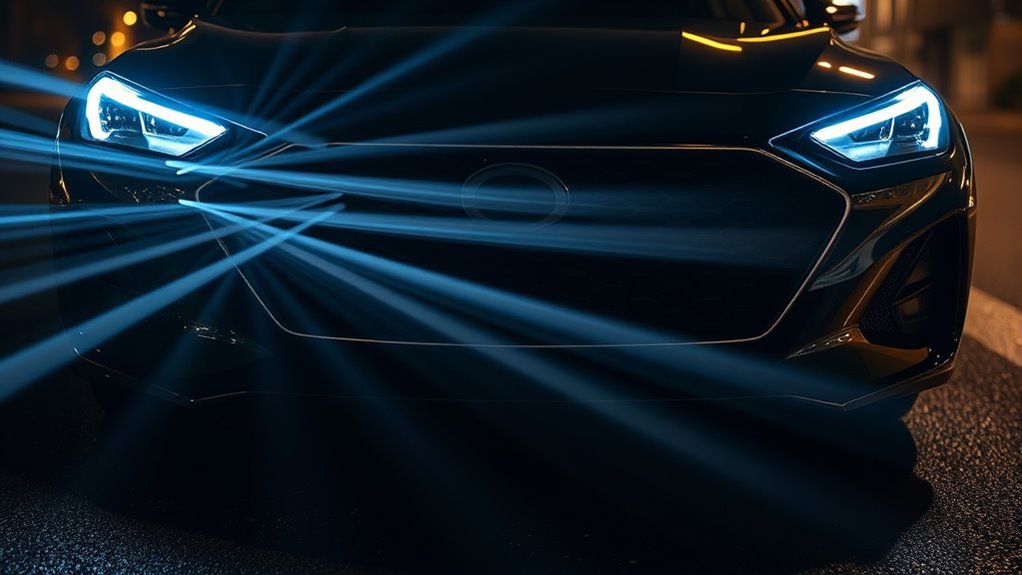
Laser headlights are revolutionizing automotive lighting by offering brighter, more energy-efficient illumination than traditional systems. As you consider the future of vehicle lighting, it’s clear that laser technology isn’t just about making cars look futuristic; it’s about improving safety, efficiency, and integration with emerging automotive innovations. One important aspect to examine is how laser headlights fit into the broader landscape of autonomous vehicle integration. These advanced systems are designed to work seamlessly with sensor arrays and navigation algorithms, providing precise, adaptive illumination that enhances both visibility and safety. Unlike conventional headlights, laser beams can be directed with remarkable accuracy, allowing autonomous vehicles to better detect obstacles, pedestrians, and road signs even in low-light conditions. This integration not only improves the vehicle’s perception but also reduces the need for overly bright, energy-consuming lighting that traditional systems often require. From an energy efficiency analysis standpoint, laser headlights excel because they produce more lumens per watt than halogen or LED systems. This means they consume less power while providing superior illumination, directly contributing to the overall energy savings of a vehicle. For electric vehicles especially, this efficiency can extend range and reduce energy waste, making laser headlights a practical upgrade rather than just a luxury feature. When you think about the potential for autonomous vehicles to operate longer distances on a single charge, the energy efficiency of laser headlights becomes even more critical. They help optimize power consumption without compromising visibility, which is essential for the reliability of autonomous driving systems. Additionally, the longer lifespan of laser headlights means less frequent replacements, reducing maintenance costs and environmental impact. This durability aligns with the sustainability goals many automakers are pursuing. As you explore the technological landscape, it’s evident that laser headlights are more than just a flashy feature—they’re an integral component of next-generation vehicles that aim to combine safety, efficiency, and smart integration. Incorporating smart automotive components into lighting systems can further enhance vehicle performance and driver assistance features. While the initial price point may be higher, the benefits in energy savings, enhanced autonomous driving capabilities, and reduced maintenance can outweigh the costs over time. In summary, laser headlights are not just hype but a meaningful step toward smarter, more efficient automotive lighting. They complement autonomous vehicle systems by offering precise, adaptive illumination and contribute greatly to energy efficiency analysis, making them a vital innovation for the future of driving. With ongoing advancements, it’s likely we’ll see laser headlights become standard in many vehicles, shaping the way we navigate roads in the years to come.
As an affiliate, we earn on qualifying purchases.
Frequently Asked Questions
Are Laser Headlights More Energy-Efficient Than LED or HID?
Yes, laser headlights are more energy-efficient than LED or HID options because they consume less energy while producing brighter, more focused light. Their design complexity allows for precise light control, reducing waste and improving efficiency. You’ll find that lasers deliver better illumination with lower energy consumption, making them a promising technology for future automotive lighting. However, their advanced design can be more expensive and complex to maintain.
How Long Do Laser Headlights Typically Last?
Laser headlights typically last around 10,000 to 20,000 hours, making their headlight lifespan considerably longer than traditional halogens or LEDs. You won’t need frequent replacements, but maintenance considerations include ensuring the laser modules stay cool and protected from damage. Regular inspections help keep these advanced headlights functioning at their best. With proper care, laser headlights offer a durable, long-lasting lighting solution that minimizes replacement costs over time.
Are Laser Headlights Safe for Other Drivers?
Laser headlights are as safe as a well-sharpened pencil, but you should still be cautious. While they’re designed with safety in mind, laser headlight hazards can include driver distraction for others on the road. Bright, intense beams might momentarily dazzle or distract nearby drivers, so proper alignment and shielding are essential. Overall, when used responsibly, laser headlights pose minimal risks to other drivers, making them a safe modern lighting option.
What Are the Environmental Impacts of Laser Headlight Manufacturing?
You should consider that manufacturing laser headlights impacts the environment through emissions and material sustainability. The process can produce higher manufacturing emissions due to energy-intensive production, but advances aim to reduce these impacts. Additionally, manufacturers are working on more sustainable materials to lessen environmental harm. While laser headlights may have some environmental drawbacks, ongoing innovations focus on making their manufacturing more eco-friendly, helping balance technological benefits with environmental responsibility.
Will Laser Headlights Become Standard in All Vehicles?
Laser headlights will likely become standard in all vehicles sooner than you think, revolutionizing automotive innovation and lighting technology. This cutting-edge technology offers brighter, more efficient illumination, enhancing safety and driving experience. As automakers prioritize advancements, laser headlights could soon dominate the road, transforming your vehicle into a marvel of modern engineering. Prepare for a future where every car shines brighter with laser precision, making outdated lighting systems feel like relics of the past.
automotive laser headlight upgrade
As an affiliate, we earn on qualifying purchases.
As an affiliate, we earn on qualifying purchases.
Conclusion
So, after all this, it seems laser headlights are just the shiny new toy in the automotive world. Sure, they promise a brighter, more efficient future, but don’t be surprised if they’re just a high-tech gimmick that burns a hole in your wallet. It’s almost amusing how we chase the latest tech, thinking it’ll change everything—only to find out it’s just another dazzling flash in the pan. Looks like innovation doesn’t always mean necessity!
energy-efficient vehicle headlights
As an affiliate, we earn on qualifying purchases.
As an affiliate, we earn on qualifying purchases.
autonomous vehicle lighting systems
As an affiliate, we earn on qualifying purchases.
As an affiliate, we earn on qualifying purchases.
Fall Picks
fall essentials
As an affiliate, we earn on qualifying purchases.