To improve night visibility without overdoing brightness, focus on optimizing your vehicle’s lighting—use low beams properly and dim dashboard lights to reduce glare. Keep your windshield clean and streak-free, as dirt and smudges impair clarity and cause reflections. Consider glare-reducing coatings or treatments for your glass, and adjust your viewing habits for better night vision. If you keep these tips in mind, you’ll find it easier to see clearly and drive safely in low-light conditions.
Key Takeaways
- Adjust vehicle lighting to appropriate levels, using low beams and avoiding excessive brightness.
- Regularly clean and maintain the windshield to prevent glare and improve clarity.
- Use glare-reducing coatings or films on the windshield to minimize headlight reflections.
- Enhance night vision by reducing interior dashboard brightness and avoiding unnecessary reflections.
- Improve focus and response by adopting safe viewing habits and minimizing external visual distractions.
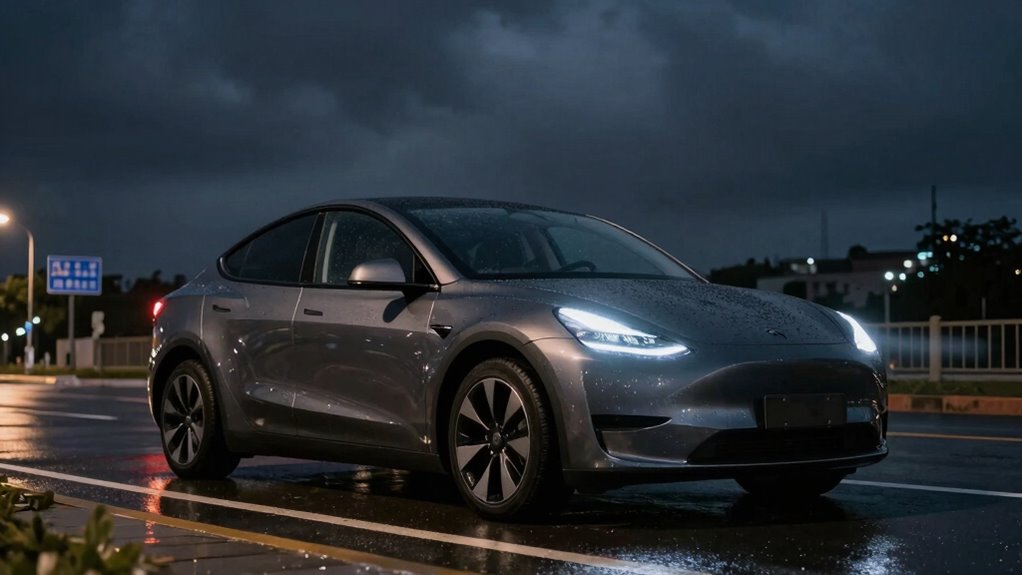
Have you ever struggled to see clearly while driving or walking at night? It can be frustrating trying to navigate in low-light conditions, especially when your eyes tire quickly or your surroundings seem blurry. One of the most effective ways to improve night visibility is to focus on proper lighting adjustment. Instead of cranking up your headlights or relying on overly bright screens, learn to fine-tune your vehicle’s lighting to match the environment. Dim your dashboard lights slightly so they don’t cause glare or distract your vision. Use your headlights appropriately—dim low beams when approaching other vehicles and switch to high beams only on dark, rural roads where there’s no oncoming traffic. Proper lighting adjustment helps your eyes adapt better to darkness, reducing strain and improving overall clarity.
Another critical factor is windshield clarity. Dirt, smudges, or streaks on your windshield can significantly impair your ability to see at night. Make it a habit to clean your windshield regularly, especially the inside surface, since fog or dust can accumulate unnoticed. Use a good-quality glass cleaner and a microfiber cloth to wipe away smudges that may cause glare or distort light. Also, consider the tint or coatings on your windshield; some treatments can help reduce glare from headlights and streetlights, making night driving safer and less stressful. Always ensure your windshield wipers are in good condition, so they clear away rain, snow, or dirt efficiently without streaking. Additionally, windshield treatments that reduce glare can further enhance visibility during night driving. Research also suggests that sound wave therapy might aid in improving visual focus and reaction time, which could be beneficial for night driving. Regularly adjusting your viewing habits can further optimize your night vision and reaction capabilities.
windshield glare reduction coating
As an affiliate, we earn on qualifying purchases.
As an affiliate, we earn on qualifying purchases.
Frequently Asked Questions
Can Tinted Windows Affect Night Visibility?
Yes, tinted windows can affect your night visibility. Window tinting reduces glare and blocks some light, which might make it harder to see clearly in low-light conditions. The visibility effects depend on the tint’s darkness level; darker tints generally decrease night vision more than lighter ones. To stay safe, choose window tinting that balances glare reduction with adequate visibility, especially for night driving.
Does Wearing Glasses Improve Night Vision?
Think of wearing glasses as your modern “magic shield” against night blindness. Yes, glasses with vision correction improve your night vision by sharpening focus and reducing strain. Thanks to advanced lens technology, they enhance contrast and clarity in low light. If your vision is corrected properly, you’ll see better in the dark, making nighttime driving or walking safer and more comfortable. Just make certain your prescription is up-to-date for maximum results.
Are There Specific Colors Better for Night Visibility?
You should opt for colors with high contrast, like yellow or white, as they stand out well against dark backgrounds, improving night visibility. Cooler color temperatures, such as blue or white light, can enhance contrast and clarity without overwhelming your eyes. Avoid red or orange, which are less visible at night. By focusing on high contrast and appropriate color temperature, you can see better without straining your eyes.
How Does Aging Impact Night Vision?
As you age, your night vision often declines due to reduced vision adaptation and retinal health. You might notice difficulty seeing in low light, slower adjustment when moving from bright to dark areas, and decreased contrast sensitivity. To help, focus on maintaining retinal health through a balanced diet rich in antioxidants, regular eye checkups, and protecting your eyes from UV exposure. These steps can support better night vision as you age.
Can Diet Influence Night Sight?
Think of your eye health as a garden; proper diet changes and nutrient intake are the sunlight it needs. Eating foods rich in vitamin A, like carrots and sweet potatoes, can boost your night sight. Studies show adequate zinc and omega-3s support eye function. By maintaining a balanced diet, you actively nurture your vision, helping your eyes adapt better in low-light conditions without relying solely on external aids.
As an affiliate, we earn on qualifying purchases.
Conclusion
Remember, it’s all about finding the right balance—just like the saying “a little goes a long way.” By adjusting your headlights, keeping your windshield clean, and using proper lighting techniques, you can see better at night without blinding yourself or others. Don’t overdo it; instead, aim for clear, comfortable visibility. When you strike that perfect balance, nighttime driving becomes safer and less stressful, proving that sometimes, less truly is more.
vehicle low beam headlight bulbs
As an affiliate, we earn on qualifying purchases.
As an affiliate, we earn on qualifying purchases.
As an affiliate, we earn on qualifying purchases.