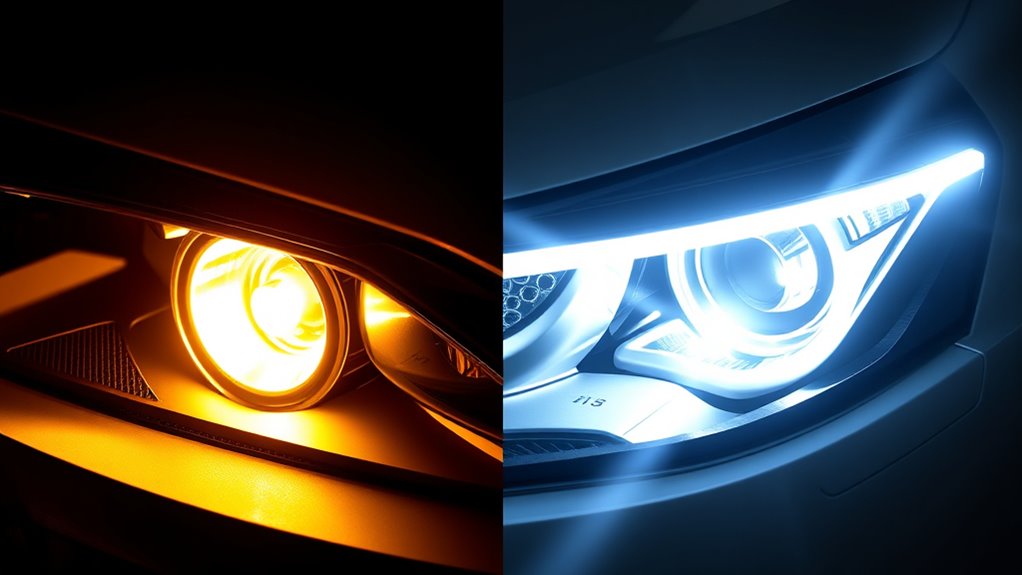
When upgrading old headlights, LEDs often provide better energy efficiency, longer lifespan, and more even light distribution, making them a popular choice. HIDs deliver brighter, longer-range beams with focused focus and sharper cutoff, ideal for high-speed driving. However, installation can be trickier, and legal standards vary. To find the best option for your vehicle and driving conditions, consider your budget, compatibility, and local laws. More details can help you make the right choice.
Key Takeaways
- Evaluate your vehicle’s compatibility and housing support for HID or LED upgrades before choosing a conversion method.
- LEDs offer longer lifespan, lower energy consumption, and easier installation, making them a cost-effective upgrade.
- HIDs provide more intense, long-range beams but may require more complex wiring and regulatory compliance checks.
- Consider your driving conditions—HIDs suit long-distance driving, while LEDs excel in city and off-road environments.
- Ensure the upgrade kit complies with legal standards (DOT/ECE) to avoid glare issues and fines.
Understanding the Technology Behind HID and LED Headlights

HID and LED headlights operate using fundamentally different technologies that influence their performance and efficiency. HIDs produce light through an electric arc between tungsten electrodes within a gas-filled chamber, creating a bright, intense beam. LEDs generate light via semiconductor diodes that emit photons when an electric current flows through them. This difference impacts their color temperature, with LEDs often producing a more consistent, crisp white light, while HIDs can vary from white to bluish hues. The beam pattern also varies; HIDs tend to have a more focused and intense beam, whereas LEDs offer a more precise and uniform light distribution. These technological distinctions shape how each headlight type performs on the road, affecting visibility and overall lighting quality. Additionally, energy efficiency plays a crucial role in their popularity, with LEDs generally consuming less power and generating less heat than HIDs.
Brightness and Light Output Comparison
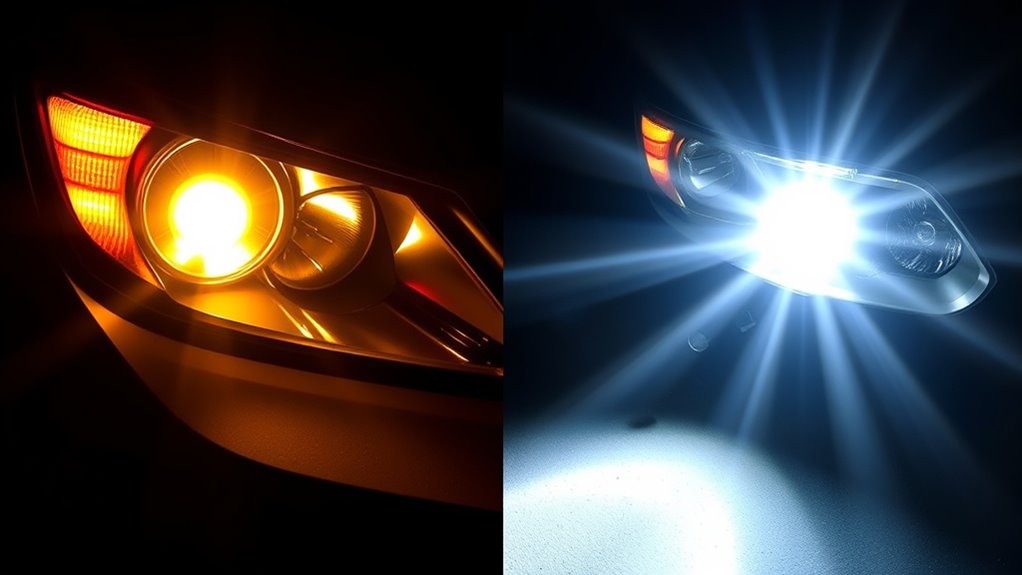
When comparing brightness and light output, HIDs often produce a more intense and powerful beam that can illuminate the road farther ahead, thanks to their high-intensity arc technology. Their beam focus tends to be sharper, providing a clear-cut cutoff line that reduces glare for oncoming drivers. HIDs usually offer higher color temperatures, ranging from 4300K to 6000K, resulting in a bright, white light that enhances visibility in dark conditions. LED headlights, while slightly less intense, deliver a consistent and evenly distributed light with good beam focus, minimizing dark spots. Their lower color temperatures, around 5000K to 6500K, produce a clean white or slight bluish hue. Ultimately, HIDs excel in sheer brightness and range, but LEDs provide a well-balanced output suited for everyday driving. Additionally, light output consistency is key to ensuring safe and effective nighttime visibility across different conditions, and advancements in lighting technology continue to improve performance and reliability for both options. Improving the technological advancements in headlight systems also contributes to better overall illumination and driver safety.
Energy Efficiency and Power Consumption
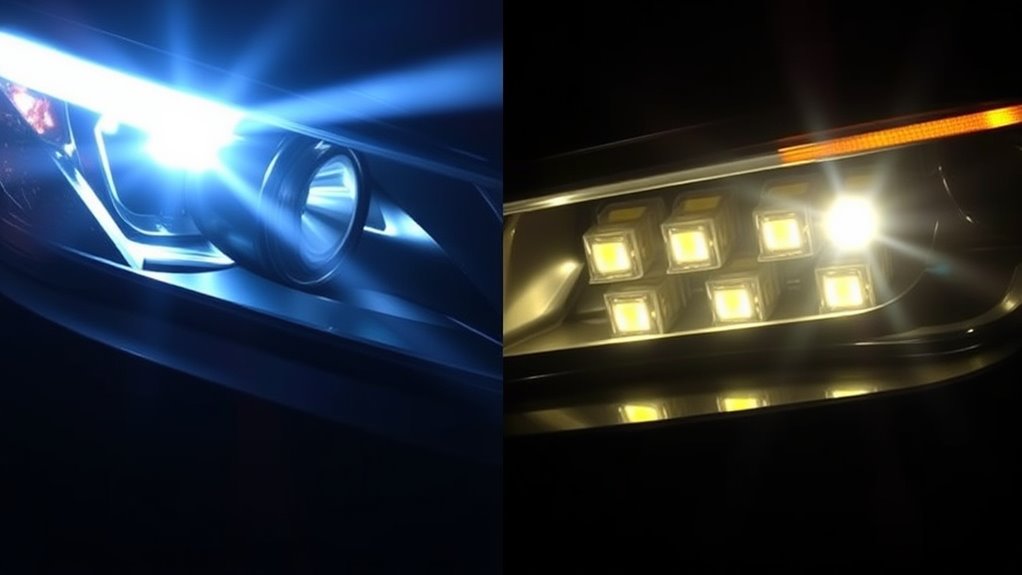
While both HID and LED headlights are designed to improve visibility, LEDs generally consume less power and are more energy-efficient. This means you’ll see better energy savings over time, reducing your vehicle’s overall power consumption. LEDs are highly efficient, converting more electrical energy into visible light with minimal waste, which helps extend your battery life and reduce strain on your electrical system. HIDs, while still more efficient than halogen bulbs, typically use more power than LEDs, leading to slightly higher energy usage. If energy efficiency is a priority, LEDs offer superior power savings, making them the better choice for those looking to optimize fuel economy and lower energy costs while upgrading their headlights. Additionally, choosing the right body jewelry materials can ensure longevity and optimal performance of your upgrade. For optimal performance, consider the lighting technology that best suits your vehicle’s electrical system and your driving needs. Incorporating energy-efficient lighting solutions can further enhance your vehicle’s overall efficiency and reduce long-term operating costs. Moreover, selecting compatible headlight components can help prevent potential electrical issues and maximize the lifespan of your upgrade.
Installation Process and Compatibility
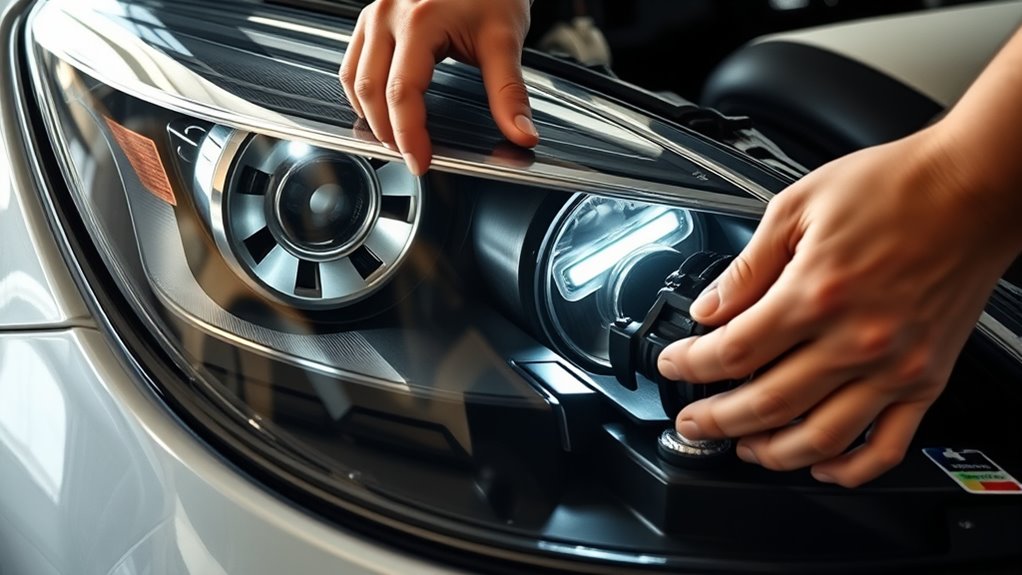
When upgrading to HID or LED headlights, you’ll need to check if your vehicle model is compatible. The installation process varies in complexity and may require specific tools or accessories. Understanding these factors helps guarantee a smooth and safe conversion. Consulting compatibility information can ensure the chosen upgrade fits your vehicle and meets safety standards.
Compatibility With Vehicle Models
Compatibility with your vehicle model is a essential factor to take into account when choosing between HID and LED conversions. Not all headlights fit every car, so understanding vehicle fit and model compatibility guarantees your upgrade works seamlessly. Before purchasing, verify that the bulb size matches your vehicle’s specifications. Some models may require specific adapters or wiring modifications. Keep in mind that certain headlight housings are not compatible with HID or LED bulbs, affecting fit and performance. Checking your vehicle’s make, model, and year helps prevent issues later. Additionally, research whether your car’s electrical system supports the new bulbs without extra components. Doing this homework will save you time and money, guaranteeing a smooth upgrade process. Ensuring free floating headlight housings are suitable for the new bulbs can also influence the success of your upgrade.
Installation Complexity and Steps
Installing HID or LED headlights involves a series of steps that can vary in complexity depending on your vehicle and the type of conversion kit you choose. The installation difficulty ranges from straightforward to more involved, requiring different levels of technical skill. To guarantee a smooth process, follow a clear step-by-step guide tailored to your specific headlights and vehicle model. Typically, you’ll need to access your headlight assembly, remove the old bulbs or modules, and connect the new HID or LED components. Some kits may require additional wiring or adapters, which can add to the complexity. Carefully review the instructions provided with your kit and consider consulting a professional if you’re unsure about any step. Proper installation is key to safe, effective lighting. Additionally, understanding the compatibility between your vehicle and the upgrade kit can prevent potential issues during installation, especially considering factors like filtration and pump protection that ensure the longevity of your lighting system. Furthermore, ensuring the quality of the components can significantly impact installation success and long-term performance.
Required Tools and Accessories
To guarantee a smooth installation of HID or LED headlights, you’ll need a specific set of tools and accessories that match your vehicle and chosen conversion kit. Making sure you have the right installation tools and meeting accessory requirements is vital for safety and effectiveness. Proper tools help you handle components carefully and avoid damage. You might need a socket wrench, screwdrivers, pliers, and possibly a wire stripper. Additionally, consider accessories like relay harnesses, resistors, or adapters to ensure compatibility and prevent flickering. Having these items ready minimizes delays and simplifies the process. Always check your kit’s instructions for any special tools or accessories needed for your specific vehicle model. This preparation guarantees a more efficient and secure upgrade.
Lifespan and Durability
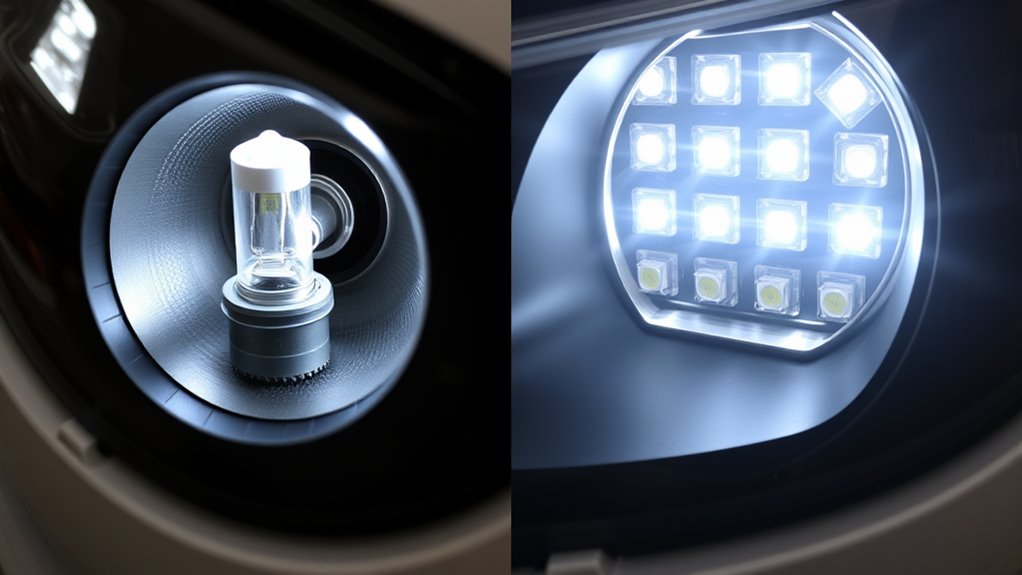
You’ll want to contemplate how long each bulb type lasts and how well it resists daily wear and tear. LED lights generally have a longer lifespan and are more durable, requiring less maintenance over time. Understanding these factors helps you choose a solution that saves you effort and replacement costs in the long run. Additionally, considering smart lighting integration can enhance convenience and energy efficiency in your vehicle. Furthermore, the performance ratings based on suction power and durability from trusted brands can guide your choice toward more reliable headlights.
Bulb Longevity Expectations
When comparing HID and LED bulbs, their longevity and durability play a crucial role in determining overall value. You’ll want bulbs that last longer and need fewer replacements. Generally, LEDs tend to have a longer lifespan, often exceeding 25,000 hours, thanks to their superior bulb durability. HIDs typically last around 2,000 to 3,000 hours, meaning more frequent replacement intervals. Your choice impacts maintenance costs and convenience. Consider these points:
- LED bulbs usually require fewer replacements over time
- HID bulbs tend to burn out sooner, needing more frequent replacements
- Durability affects how well bulbs withstand vibrations and heat
- Longer lifespan means fewer interruptions and costs
- Both types offer decent longevity but vary markedly in replacement intervals
- The technological advancements in LED manufacturing continue to improve their lifespan and resilience, making them a more reliable choice for many drivers. These improvements also enhance their resistance to thermal stress and vibration, which are common challenges in automotive environments. Additionally, ongoing innovations in manufacturing technology contribute to making LED bulbs more robust and cost-effective over the long term. Moreover, these advancements have led to improved energy efficiency, further boosting their appeal for modern vehicles.
Choosing the right bulb depends on how long you want your headlights to last without hassle.
Resistance to Wear and Tear
Because of their construction, LED bulbs generally resist wear and tear better than HID bulbs, making them more durable over time. LEDs have higher resistance levels to vibrations, shocks, and temperature fluctuations, which are common causes of durability concerns in headlight systems. This robustness is partly due to their solid-state design, which eliminates many fragile components found in HIDs. Additionally, the fewer parts prone to damage in LEDs contribute to their durability. Unlike HIDs, which contain fragile components like gas-filled bulbs and delicate ballasts, LEDs are solid-state devices with fewer parts prone to damage. This inherent robustness means you’ll likely experience fewer failures and replacements, especially in rough driving conditions. Moreover, the ease of maintenance associated with LEDs simplifies repairs and replacements, further enhancing their longevity. Over the lifespan, LEDs tend to maintain consistent brightness and performance, further reducing your worries about wear and tear. Their resistance to environmental stressors makes LEDs a more reliable, long-lasting choice for improving your vehicle’s lighting system. Additionally, the longer lifespan of LED headlights reduces the need for frequent replacements, saving time and maintenance costs in the long run.
Maintenance Requirements
LED bulbs typically require less maintenance over their lifespan compared to HID bulbs, thanks to their durable construction. They rarely need bulb cleaning since they don’t produce as much heat or dirt buildup. LEDs also last longer, reducing the frequency of fuse replacement in your headlight circuits. To keep your LEDs performing well, check connections periodically and ensure the lens stays clean. Unlike HID bulbs, which may need more frequent replacements, LEDs are more resilient to vibrations and shocks. Regularly inspecting your headlight system helps prevent issues like flickering or dimming. Remember, maintaining proper electrical connections and ensuring your fuses are intact can extend the life of your upgraded headlights.
- Less frequent bulb cleaning needed
- Longer lifespan reduces replacements
- Fewer fuse replacements required
- Better resistance to vibrations
- Easy to inspect and maintain
Cost and Budget Considerations
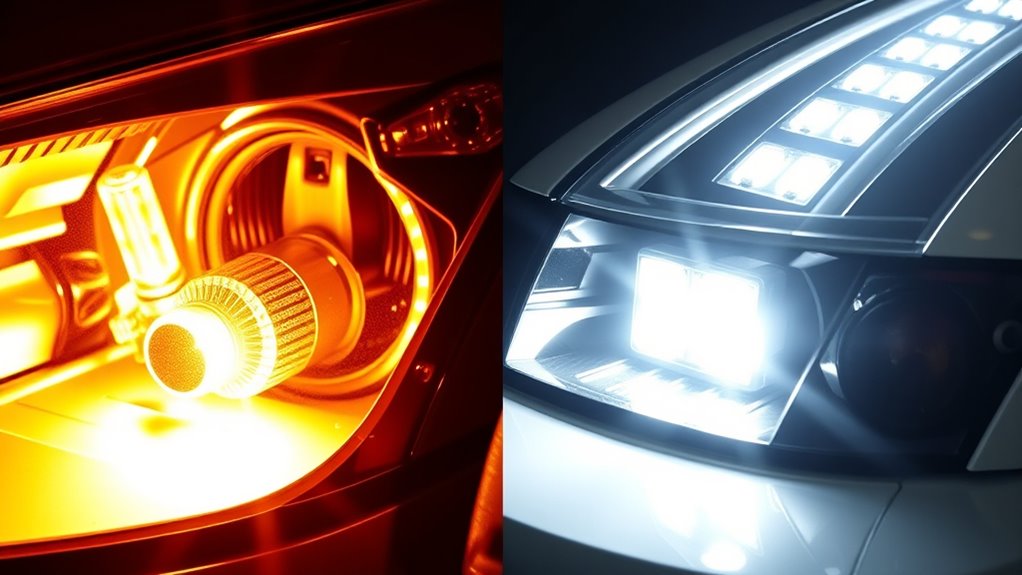
Converting from HID to LED headlights involves careful consideration of the overall costs and your budget constraints. A thorough cost comparison helps you understand the initial expenses, including the price of LED bulbs, installation, and possible additional components. LED conversions tend to be more affordable upfront but may require higher-quality parts for peak performance. Your budget planning should also account for long-term savings, such as lower energy consumption and reduced maintenance costs. While HID upgrades might seem cheaper initially, they could lead to higher expenses later due to shorter lifespan and potential repairs. Balancing your budget with your lighting needs ensures you choose a solution that fits financially while providing the lighting performance you desire.
Legal Regulations and Road Safety Standards
Legal regulations and road safety standards play a crucial role in determining your headlight upgrade choices, as improper or non-compliant lighting can lead to fines, penalties, or safety hazards. Guaranteeing legal compliance means your HID or LED conversions meet local laws and vehicle codes. Safety standards specify the correct brightness, beam pattern, and aim to avoid dazzling other drivers and impairing visibility. Ignoring these guidelines risks not only fines but also accidents. Before upgrading, verify your headlights align with your jurisdiction’s regulations. Consider these key points:
Legal compliance and safety standards ensure your headlight upgrades are safe, legal, and avoid fines or hazards.
- Check local legal requirements for headlight brightness and color
- Ensure your headlights have the proper beam pattern
- Confirm your conversion kit is DOT or ECE approved
- Avoid modifications that cause glare or improper aim
- Stay updated on any changes in lighting laws
Sticking to safety standards protects you and others on the road.
Maintenance and Troubleshooting
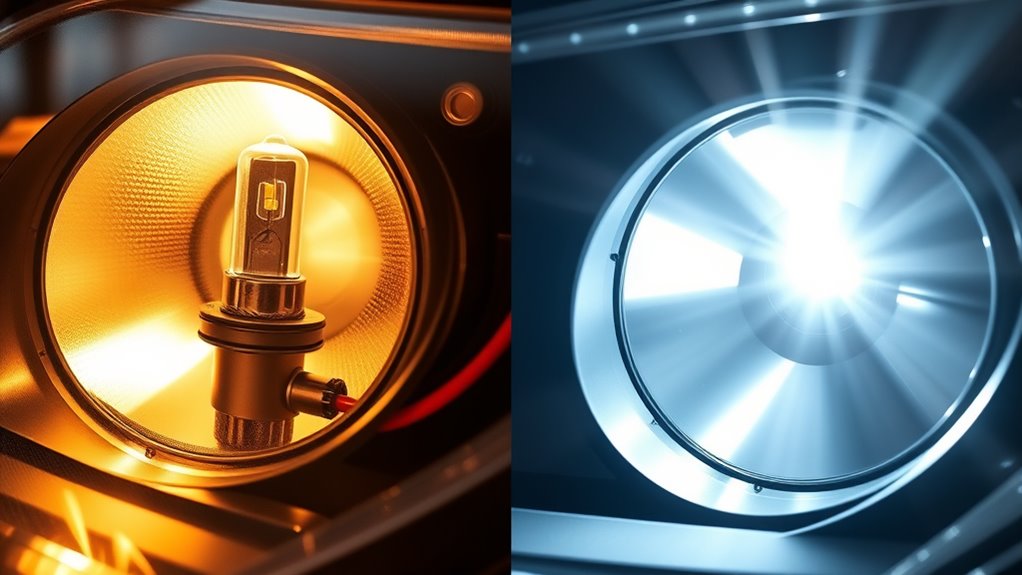
Regular maintenance is crucial to keep your headlight system functioning properly and guarantee safe visibility on the road. You should regularly check your bulbs for signs of dimming or flickering, which may indicate a need for bulb replacement. When replacing bulbs, ensure you handle them carefully to avoid damage and follow the manufacturer’s instructions. Cleaning and polishing your headlights help remove dirt, fog, and oxidation that can diminish light output. Use a quality headlight cleaner or polish to restore clarity and improve illumination. If you notice uneven light distribution or flickering, troubleshoot wiring issues or faulty ballast components. Keeping your headlights clean, well-maintained, and promptly troubleshooting issues guarantees ideal performance and safety during nighttime driving.
Making the Right Choice for Your Vehicle

Choosing between HID and LED headlights depends on your vehicle’s specific needs, driving habits, and budget. Consider how important factors like color temperature and beam pattern are for your visibility and style. HIDs usually offer a higher color temperature, producing a bluish-white light, while LEDs provide a wider range of color options. Think about the beam pattern—HIDs tend to have a more focused beam, ideal for long-distance visibility, whereas LEDs often deliver a broader spread for better peripheral illumination. Your driving environment influences your choice, whether it’s city traffic or off-road adventures. Budget constraints also matter, as LEDs generally cost more upfront but last longer. Make an informed decision based on these factors to ensure maximum safety and performance.
- Color temperature preferences
- Beam pattern suitability
- Vehicle compatibility
- Budget considerations
- Driving conditions
Frequently Asked Questions
How Do HID and LED Headlights Perform in Extreme Weather Conditions?
HID and LED headlights offer decent weather resilience, but LEDs generally perform better in extreme conditions due to their quicker response time and better fog visibility. You’ll notice LEDs cut through fog and heavy rain more effectively, improving safety. HIDs can struggle in very cold or wet weather, causing flickering or reduced brightness. So, if weather resilience matters most, LEDs are the smarter choice for consistent performance in tough conditions.
Can I Upgrade My Headlights Myself or Should I Hire a Professional?
Sure, you can try DIY installation, but don’t be surprised if your headlights end up more of a headache than a highlight. Upgrading headlights involves handling delicate wiring and precise alignment, so professional service is often the smarter choice. Hiring experts ensures safety, proper installation, and peak performance. While DIY might seem tempting, trusting a professional saves you time, frustration, and potential costly mistakes in the long run.
Are There Any Aftermarket Accessories to Enhance HID or LED Headlight Performance?
Yes, you can find aftermarket upgrades to boost your HID or LED headlight performance. Performance enhancements like anti-fog covers, beam pattern adjusters, and high-quality ballast or driver kits can improve brightness, focus, and longevity. These aftermarket accessories are designed to maximize your headlights’ output and durability. Just make sure to select compatible parts from reputable brands to ensure safe, reliable upgrades that truly enhance your vehicle’s lighting capabilities.
How Do HID and LED Headlights Impact Vehicle Resale Value?
Think of your headlights as a first impression—bright and clear can boost your vehicle’s appeal. Upgrading to HID or LED headlights can positively impact resale value if you choose reputable brands with solid warranties. However, poorly installed or cheap conversions might raise questions about reliability. Stick with trusted brands, keep up with warranty considerations, and your upgraded headlights will shine as a testament to your vehicle’s value, attracting buyers.
What Are the Best Practices for Recycling or Disposing of Old Headlight Bulbs?
When recycling or disposing of old headlight bulbs, you should follow proper disposal methods and consider bulb recycling programs. Check local regulations for hazardous waste guidelines, especially for HID bulbs containing mercury. Many communities have designated drop-off points or recycling centers for bulbs. Avoid throwing them in regular trash to prevent environmental contamination. Always handle bulbs carefully to prevent breakage, and wear gloves when disposing of or recycling them.
Conclusion
Choosing between HID and LED headlights isn’t just about brightness or cost—there’s a hidden factor that could change everything. Will you prioritize long-term durability or immediate brightness? As you weigh your options, remember that the right upgrade could transform your driving experience forever. But beware—what you decide now might lead to surprises down the road. Are you ready to make the switch and discover the ultimate headlight upgrade? The choice is yours.