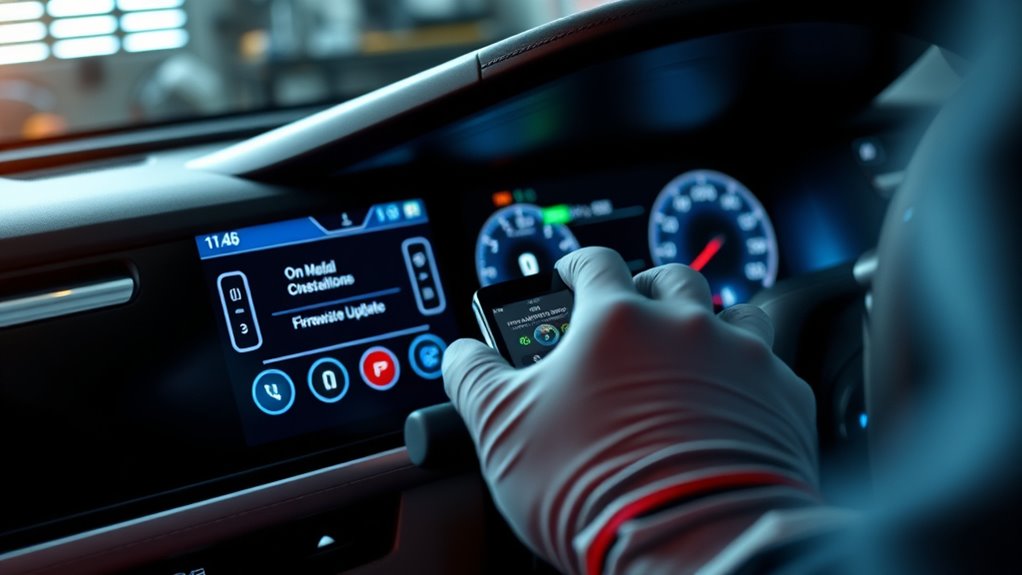

To avoid bricking your car’s tech devices during firmware updates, always verify compatibility first, ensuring the update matches your vehicle and device. Charge your battery fully and connect to a stable internet source, preferably via wired connection. Follow the manufacturer’s instructions carefully, avoiding interruptions or disconnects. Perform updates during vehicle downtime with the engine off and power steady. Staying cautious and informed helps protect your device—more essential tips lie ahead for a foolproof update.
Key Takeaways
- Verify firmware compatibility with your vehicle model before updating to prevent conflicts or device bricking.
- Fully charge your vehicle battery and use a stable internet connection during the update process.
- Follow official manufacturer instructions carefully, avoiding interruptions or disconnections until the update completes.
- Schedule updates during vehicle downtime and ensure the vehicle is parked and not in use.
- Post-update, verify system functionality and seek professional support if issues arise.
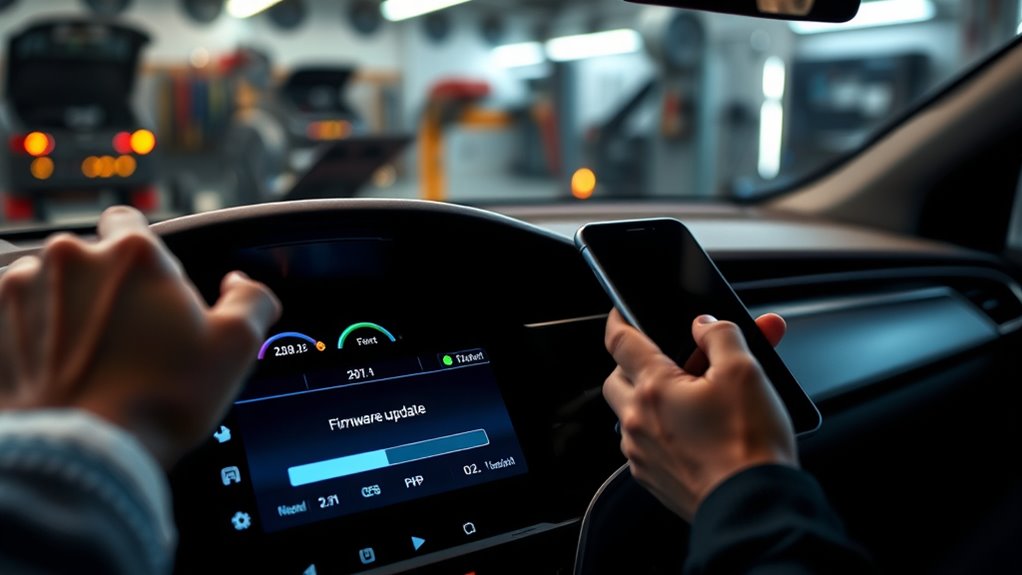
Keeping your car’s tech devices up to date is essential for ideal performance and safety. Firmware updates ensure your system runs smoothly, fix bugs, and often enhance features. However, updating isn’t just about clicking “install” when prompted; it requires careful attention to software compatibility and update timing. Ignoring these factors can lead to issues like bricking your device or causing system malfunctions. So, it’s worth understanding how to update safely and effectively.
First, before initiating any update, make sure the firmware version you’re installing is compatible with your specific vehicle model and the device itself. Manufacturers design firmware updates for particular hardware configurations, so installing incompatible software might cause conflicts, errors, or even render the device unusable. Check the manufacturer’s official website or user manual for guidance on which firmware versions suit your vehicle. This step helps prevent the risk of bricking your device due to incompatibility. If you’re unsure, contact customer support or consult a professional technician.
Always verify firmware compatibility with your vehicle model before updating to prevent potential device issues.
Timing your firmware update is equally important. You shouldn’t rush into updates immediately after they’re released. Developers often release updates to fix security flaws or improve performance, but early adoption can sometimes introduce unforeseen bugs. Wait for a period after release to see if other users report issues, and check for any official advisories. Planning your update during a time when you won’t need your vehicle immediately allows you to troubleshoot if something goes wrong. It’s also wise to perform updates when your vehicle has a stable power source—preferably when parked and plugged into a charger if applicable—so the process isn’t interrupted due to power loss.
Furthermore, ensure your vehicle’s battery is fully charged before updating. An interruption during the firmware installation due to low power can cause serious problems, including bricking the device. Make sure your internet connection is stable if downloading updates online, and avoid updating over unreliable networks that could corrupt the download. Some manufacturers recommend performing updates using a wired connection or a dedicated app that verifies the integrity of the download before installation.
Additionally, understanding the importance of software compatibility helps prevent potential issues during updates. Finally, follow the manufacturer’s instructions carefully. Avoid disconnecting devices or turning off the ignition during the update process. Once the update begins, let it run its course completely. Afterward, verify that the system functions correctly and that all features are operational. If you experience issues, consult professional support rather than attempting to troubleshoot blindly. By paying close attention to software compatibility and timing your updates carefully, you minimize the risk of damaging your tech devices and ensure your vehicle remains safe, reliable, and up-to-date.
Frequently Asked Questions
Can I Update My Car’s Firmware Without Professional Assistance?
Yes, you can update your car’s firmware yourself, but be cautious with DIY upgrades. Follow the manufacturer’s instructions carefully to avoid bricking your device. Keep in mind, doing it yourself may affect your warranty, so check the terms beforehand. If you’re unsure or uncomfortable, consider professional assistance to ensure a safe update and maintain your warranty coverage. Always prioritize safety and proper procedures.
How Often Should I Check for Firmware Updates?
You should check for firmware updates every 3 to 6 months to guarantee your car’s software remains compatible and secure. Regularly monitoring update frequency helps you stay ahead of software compatibility issues and potential bugs. Keep an eye on manufacturer notifications or visit their website periodically. Updating your firmware promptly ensures your vehicle runs smoothly, improves features, and maintains compatibility with other devices, reducing the risk of glitches or malfunctions.
What Are the Signs of a Failed Firmware Update?
A failed firmware update is like a storm cloud on the horizon. You might notice firmware corruption, where the device becomes unresponsive or behaves erratically. Update failure could cause error messages, inability to access features, or the device getting stuck in a boot loop. If your car’s tech acts out unexpectedly after an update—such as screen glitches or system errors—it’s a sign to seek professional help before further issues occur.
Are Firmware Updates Always Necessary for My Vehicle?
Firmware updates aren’t always necessary for your vehicle, but they can improve vehicle diagnostics, fix bugs, or enhance features. You should check firmware compatibility before updating to avoid issues. If your car runs smoothly and there are no recalls or updates from the manufacturer, you probably don’t need to update. However, staying informed about firmware updates can help maintain your vehicle’s performance and safety.
Will Updating Firmware Affect My Car’s Warranty?
Updating your firmware generally won’t affect your car’s warranty if you guarantee compatibility and don’t void any manufacturer policies. However, installing aftermarket accessories or incompatible firmware can sometimes jeopardize warranty coverage. Always check your vehicle’s warranty terms and consult your manufacturer before updating. Using official updates and verifying firmware compatibility helps protect your warranty, ensuring your car stays in top condition without risking coverage issues.
Conclusion
Remember, updating your car’s tech is like tending a delicate garden—patience and care guarantee it blooms beautifully. Don’t rush or force the process; instead, follow the steps carefully and stay vigilant. Think of it as guiding your vehicle’s soul safely through a storm, avoiding the dreaded brick. With a gentle touch and mindful approach, you’ll keep your car’s tech shining brightly, ready to accompany you on countless journeys. Trust in the process, and let your car thrive.