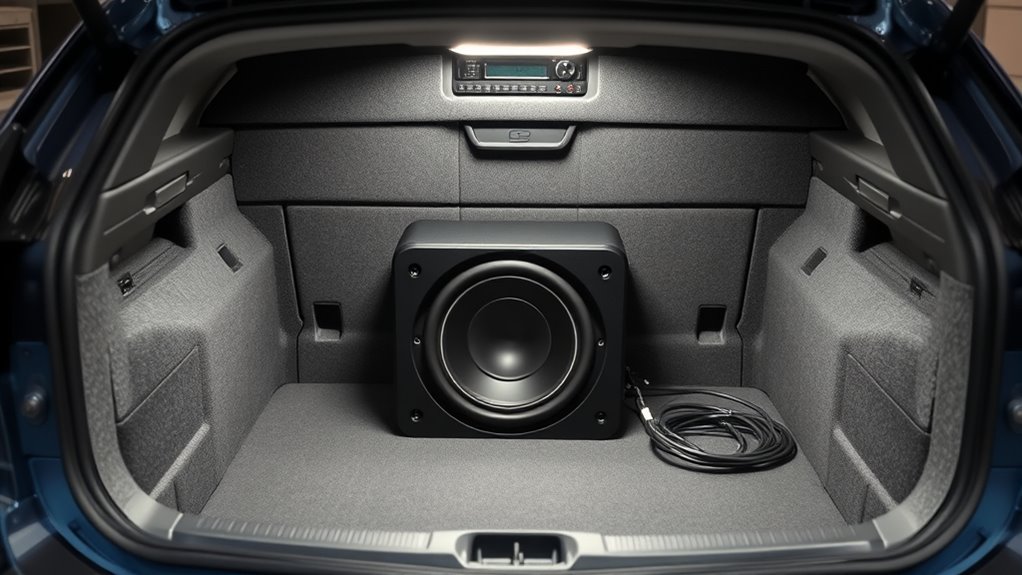

To boost your bass without replacing your stereo, focus on upgrading your amplifier with a budget-friendly model to power a subwoofer effectively. Position the subwoofer carefully and choose an enclosure that enhances bass. Improve your soundproofing with affordable foam panels and matting to prevent vibrations and noise leakage. These simple upgrades can create a richer, deeper bass experience without breaking the bank. Keep exploring for more tips to maximize your setup on a budget.
Key Takeaways
- Upgrade to an affordable dedicated subwoofer amplifier to enhance bass without replacing the stereo system.
- Use soundproofing materials like foam panels or mats to improve bass response and reduce noise leakage.
- Properly place your subwoofer in the vehicle or room and choose an enclosure type to maximize bass clarity.
- Focus on compatible, budget-friendly subwoofers and amplifiers to achieve deep bass without costly upgrades.
- Combine soundproofing and strategic placement to optimize existing equipment, delivering richer bass on a budget.

Looking to enhance your music’s bass without breaking the bank? You’re in the right place. Adding a subwoofer doesn’t have to mean replacing your entire stereo system. Instead, you can upgrade your existing setup with strategic amplifier upgrades and soundproofing techniques that make a noticeable difference without draining your wallet. The key is to maximize what you already have and introduce affordable enhancements that amplify your listening experience.
Upgrade your sound with affordable amp and soundproofing tweaks—boost bass without replacing your stereo.
First, consider your amplifier. If your current stereo doesn’t have enough power to drive a subwoofer effectively, investing in an amplifier upgrade can make a substantial difference. A dedicated amp designed for subwoofers will provide the necessary power to produce deep, punchy bass without distortion. You don’t need the most expensive model—look for a budget-friendly amplifier that offers sufficient wattage and clean sound. Properly matching the amplifier to your subwoofer ensures peak performance, so spend some time researching compatibility. An upgraded amplifier not only boosts bass but also improves overall sound clarity, giving your music the richness it deserves. Matching amplifier specifications is essential for optimal performance and avoiding potential damage.
Once your amplifier is sorted, focus on soundproofing techniques. Soundproofing your vehicle or listening space reduces unwanted vibrations and prevents bass from escaping or causing rattles. Simple measures like adding sound-deadening mats or foam panels can greatly enhance bass response by minimizing resonance and noise leakage. These techniques create a more controlled environment for your subwoofer, allowing it to operate more efficiently and produce deeper bass. Additionally, soundproofing can help you enjoy your upgraded sound system without disturbing others or facing external noise interference.
When choosing your subwoofer, size isn’t everything; placement matters just as much. Find a location within your vehicle or room where the sub can breathe and resonate freely. Proper enclosure design, such as a sealed or ported box, can further fine-tune your bass output, making it feel more powerful and precise. Pairing your subwoofer with a compatible amplifier and applying soundproofing techniques maximizes your budget’s impact, delivering a full-bodied bass experience without the need for costly overhauls.
Ultimately, by focusing on amplifier upgrades and soundproofing techniques, you can turn your existing stereo into a bass-heavy powerhouse. It’s all about smart choices—selecting the right amplifier, improving your environment, and carefully positioning your subwoofer. With some research and a bit of DIY effort, you’ll enjoy richer, deeper bass that elevates your music without overspending. Your budget-friendly upgrade will prove that you don’t need to spend a fortune to feel the beat.
Frequently Asked Questions
Can I Add a Subwoofer to Any Car Stereo System?
Yes, you can add a subwoofer to most car stereo systems, but you’ll need to take into account subwoofer placement for ideal sound and power requirements to guarantee compatibility. Check if your stereo has a dedicated subwoofer output or if you’ll need a separate amplifier. Make sure your system can handle the subwoofer’s power needs, and choose a location that minimizes vibrations and maximizes sound quality.
What Is the Best Budget-Friendly Subwoofer Brand?
Looking for a budget-friendly brand that hits all the right notes? You should check out Pioneer and Rockford Fosgate—they’re like hidden gems in the world of affordable subwoofers. These brands offer reliable, quality options without breaking the bank, making your car’s bass sound richer and deeper. With their affordable subwoofers, you can enjoy powerful sound without sacrificing your wallet, turning your ride into a concert on wheels.
How Do I Connect a Subwoofer Without Amplifiers?
You can connect a subwoofer without amplifiers using a wireless connection if your sub has Bluetooth or Wi-Fi capabilities. Just turn on the wireless feature on both devices, pair them, and adjust your stereo settings for bass. For power options, choose a subwoofer with a built-in rechargeable battery or plug it into a standard outlet. This setup offers flexibility and saves space without needing an external amplifier.
Will Adding a Subwoofer Affect My Stereo’s Warranty?
Well, don’t fret like it’s 1776—adding a subwoofer won’t necessarily void your stereo’s warranty. Just make sure you follow the manufacturer’s restrictions and avoid cutting or damaging any wiring or components. Using proper connectors and keeping everything reversible guarantees you stay within warranty limits. If you’re cautious and read the instructions, your stereo should stay covered, and you’ll enjoy improved bass without risking your warranty.
How Much Space Do I Need for a Subwoofer?
You’ll need enough space for the enclosure size of your subwoofer, typically around 0.5 to 1 cubic foot for a compact model. Measure your vehicle’s mounting location carefully, ensuring there’s room for the subwoofer and proper airflow. Keep in mind, a snug fit can improve sound quality, but avoid overcrowding to prevent damage. Check your vehicle’s trunk or under-seat area for suitable mounting spots.
Conclusion
So there you have it—mastering the art of bass boost without draining your wallet proves you’re a true audiophile in disguise. Who needs expensive upgrades when you can cleverly enhance your sound system with a subwoofer? Just remember, the real thrill isn’t in the deep lows, but in convincing everyone you’re a high-roller of sound quality—all while sticking to your budget’s humble limits. Who knew greatness could be so affordable?