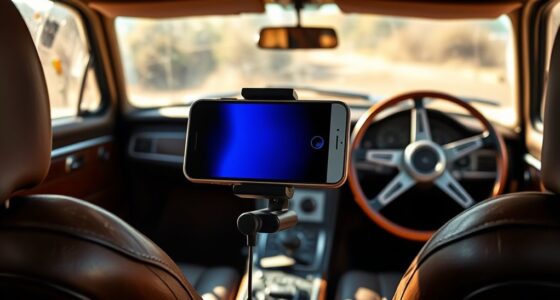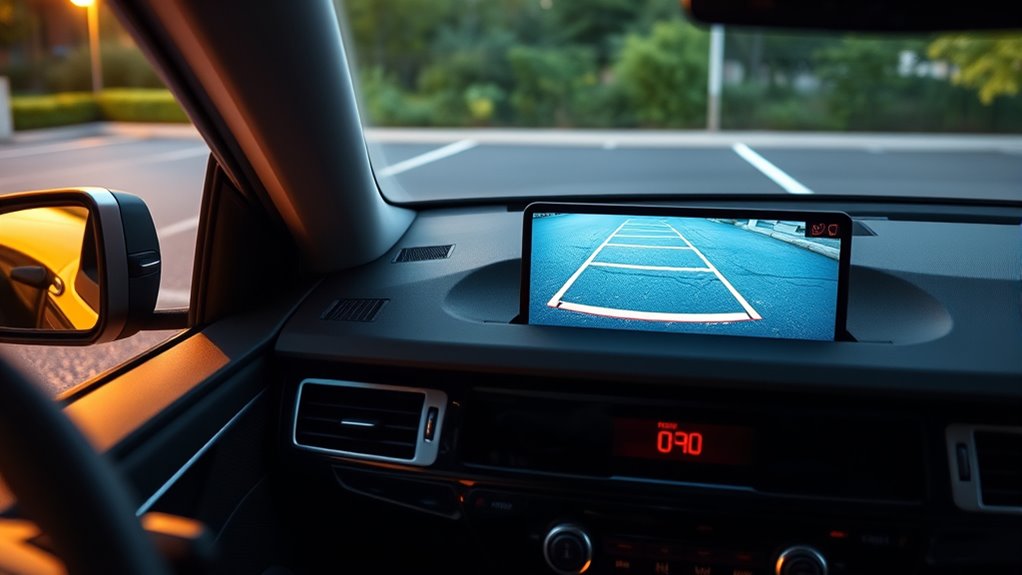

Adding a front camera feed to your dash display makes parking much easier and safer. It gives you a clear, real-time view of obstacles and surroundings, reducing stress and the risk of bumps or damage. Proper camera placement, like near the grille or above the license plate, ensures you get a broad view, while regular calibration maintains accuracy. Keep the camera clean and well-maintained to maximize visibility—and if you explore further, you’ll discover how to optimize your setup for the best parking experience.
Key Takeaways
- Choose optimal mounting locations like above the license plate for a clear, unobstructed front view.
- Ensure proper sensor calibration to align camera images with real-world distances for accurate guidance.
- Regularly clean the camera lens and check for dirt or debris to maintain image clarity and visibility.
- Verify compatibility of the camera feed with your dash display and update system software if needed.
- Perform periodic calibration checks and system tests to ensure reliable, safe parking assistance functionality.
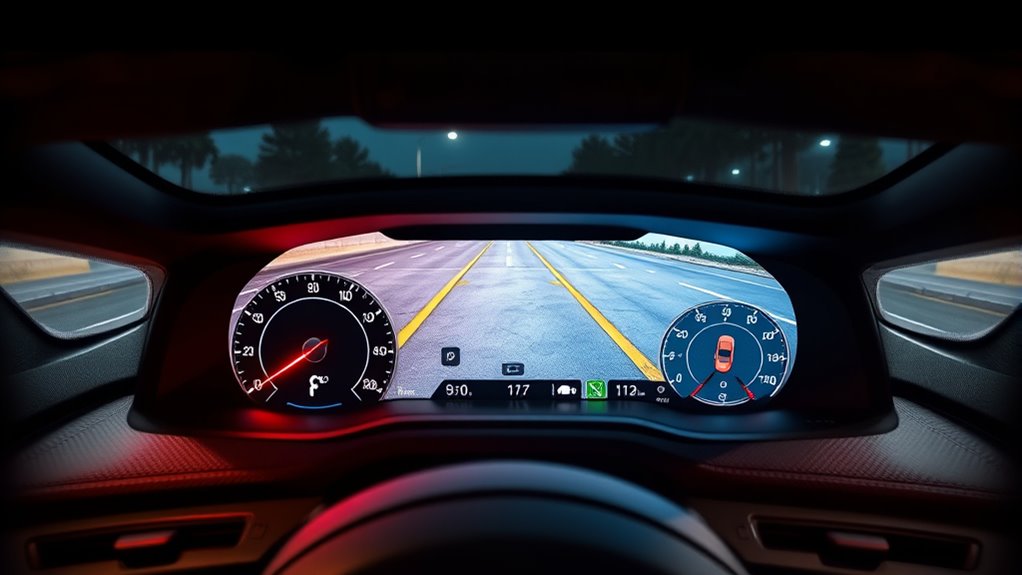
Finding a parking spot can often feel like a stressful hassle, but with the right tools and strategies, it doesn’t have to be. Adding a front camera feed to your dash display can drastically improve your parking experience, giving you a clear view of obstacles and surroundings. To do this effectively, you need to focus on proper camera placement and sensor calibration. These two elements are vital for guaranteeing that your camera provides accurate, reliable visuals that assist rather than confuse you.
Enhance parking safety with proper front camera placement and accurate sensor calibration for clearer, more reliable visuals.
When positioning your front camera, think about the ideal camera placement. You want it to be high enough to capture a broad, unobstructed view of what’s ahead, yet not so high that it distorts distances or misses close obstacles. Typically, mounting the camera near the grille or just above the license plate works well. Make sure it’s securely attached to prevent vibrations that could blur the image. Keep the lens clean and free from dirt, snow, or debris, as these can impair visibility and compromise safety. Regularly inspecting and maintaining the camera and sensor calibration helps ensure ongoing accuracy.
Once your camera is mounted correctly, sensor calibration becomes the next vital step. Proper sensor calibration ensures that the camera’s image aligns accurately with real-world distances and objects. If calibration is off, you might think you’re clear of an obstacle when you’re actually not, or vice versa. Many modern systems automatically calibrate during installation, but it’s wise to verify calibration regularly. You can do this by comparing the camera feed with actual distances measured on your vehicle or by following manufacturer calibration procedures. Accurate sensor calibration makes your front camera feed a trustworthy guide, allowing you to maneuver confidently into tight spots.
In addition to physical placement and calibration, consider how your camera integrates with your dash display. Ensure the feed is clear, free of flickering, and displays at a suitable resolution. Some systems allow you to adjust viewing angles or switch between different views, which can help tailor the visual experience to your preferences. Regularly check your camera’s calibration and position, especially after any impacts or modifications to your vehicle, to keep the system functioning effectively. Proper camera setup is essential for safe and confident parking.
Frequently Asked Questions
Can I Add a Front Camera to Any Vehicle?
Yes, you can add a front camera to most vehicles, but vehicle compatibility varies. You’ll need to check your car’s make and model to confirm it supports camera installation types like OEM, aftermarket, or wireless systems. Some vehicles may require additional wiring or adapters. If you’re comfortable with basic installation, you can do it yourself; otherwise, professional help ensures proper setup and functionality.
What Is the Cost of Installing a Front Camera?
Installing a front camera can cost as little as a few hundred dollars or soar into the thousands, depending on your choices. Installation costs vary based on vehicle type and complexity, while camera pricing ranges from budget-friendly models to premium systems with advanced features. You’ll want to budget wisely, as a quality setup can transform your parking experience, making it safer and effortless, no matter your vehicle’s make or model.
How Do I Troubleshoot Camera Feed Issues?
If your camera feed has issues, start by checking the camera angle to verify it’s properly aligned. Next, inspect the wiring compatibility—look for loose or damaged cables that could disrupt the signal. Make sure all connections are secure and match the specifications. If problems persist, reset the system or update the firmware. Regularly cleaning the camera lens can also improve image quality and prevent feed disruptions.
Will Adding a Front Camera Affect My Vehicle Warranty?
Adding a front camera typically won’t affect your vehicle warranty if you guarantee vehicle compatibility and follow proper installation procedures. However, some manufacturers may have specific warranty considerations for aftermarket modifications, so check your warranty policy first. If you install the system correctly and use compatible, quality parts, you should avoid warranty issues. Always consult your vehicle’s manual or dealer to clarify warranty considerations before proceeding.
Are There Wireless Front Camera Options Available?
Yes, wireless front camera options are available. You can easily find models that offer wireless connectivity, simplifying installation without drilling or complex wiring. Look for cameras with high camera resolution to guarantee clear images on your dash display. These wireless options are perfect if you want a clean, clutter-free setup, making parking and maneuvering safer and more convenient without sacrificing image quality.
Conclusion
With a front camera added to your dash display, parking becomes as smooth as a well-choreographed dance. No more guesswork or stressful maneuvering—just clear, real-time visuals guiding you effortlessly into tight spots. Think of it as having a sixth sense for parking, turning chaos into calm. Embrace this upgrade, and watch your parking worries melt away like snowflakes on a sunny day, making every drive smoother and more confident.