
TL;DR
Massachusetts has announced a new initiative enabling electric vehicle owners to sell excess battery power back to the grid for compensation. This program aims to promote renewable energy use and grid stability. Details on implementation and participation are still emerging.
Massachusetts has officially launched a program allowing electric vehicle (EV) owners to sell excess battery power back to the grid for monetary compensation, making it the first state to adopt such a policy at this scale. The initiative aims to incentivize EV adoption and support renewable energy integration, with participation expected to begin later this year.
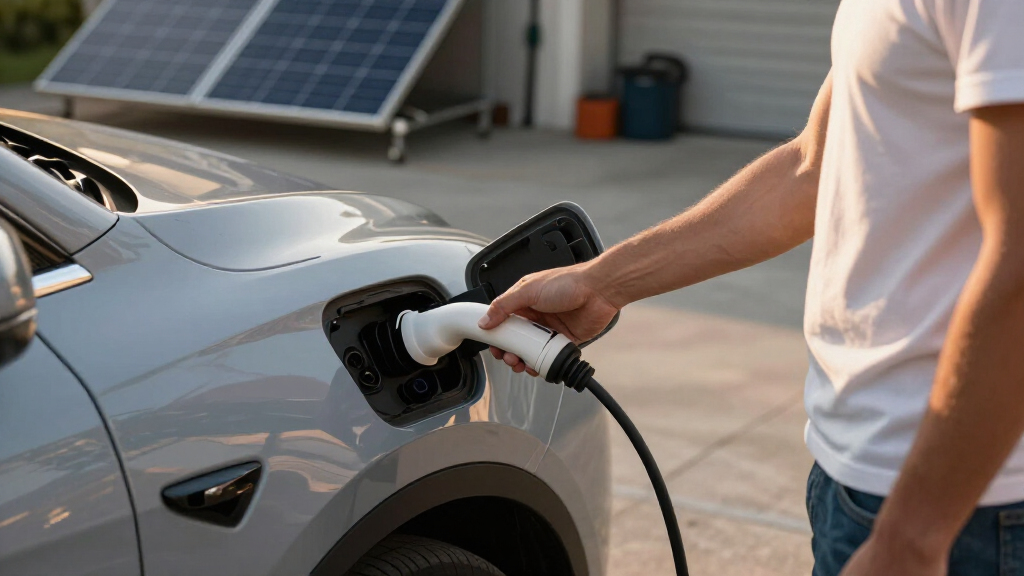
The program, announced by the Massachusetts Department of Energy Resources, enables EV owners to connect their vehicles to the grid through designated platforms and receive payments for stored energy during peak demand periods. Officials state that this could provide a new revenue stream for EV owners and help balance the grid as renewable energy sources increase.
According to the department, the pilot phase will include several thousand participants, with full rollout anticipated by late 2024. The program is part of Massachusetts’ broader efforts to meet its climate goals and modernize its energy infrastructure. It is supported by recent legislation that encourages innovative energy storage and demand response strategies.
Potential Impact on Energy and Transportation Markets
This initiative could significantly alter the way electric vehicles are viewed—not just as transportation tools but also as mobile energy assets. If successful, it may encourage wider EV adoption by providing financial incentives and could accelerate the integration of renewable energy into the grid. For consumers, it offers a new form of income and energy management, while utilities could benefit from more flexible demand response capabilities.

EV Charging Infrastructure Design: NEC 2026 Compliance, Load Management, and Fleet Charging Solutions (Electric Vehicle & Battery Engineering Series)
As an affiliate, we earn on qualifying purchases.
As an affiliate, we earn on qualifying purchases.
Massachusetts’ Leadership in Vehicle-to-Grid Innovation
Massachusetts has been at the forefront of clean energy policies, with recent legislation promoting renewable energy, energy storage, and smart grid development. The move to allow EV owners to sell battery power back to the grid builds on existing pilot projects and partnerships with technology providers. Similar initiatives are under consideration in other states, but Massachusetts is the first to formalize such a comprehensive program for residential EV owners.
This development follows a broader trend toward vehicle-to-grid (V2G) technology, which has been tested in limited markets but has not yet been widely adopted due to technical and regulatory challenges. Massachusetts’ program aims to address some of these hurdles through state-supported infrastructure and clear compensation mechanisms.
“This program marks a significant step toward integrating electric vehicles into our clean energy future. EV owners will now have the opportunity to turn their vehicles into energy assets that benefit both themselves and the grid.”
— Massachusetts Department of Energy Resources spokesperson

powerwall 10kwh Solar Storage Lithium Battery 51.2V 200Ah Battery Backup Wall-Mounted Power LiFePo4 Home Solar Electric System Storage Batteries for Home Backup Camping Emergency
【Unmatched Prismatic Cell Technology】 Our larger application LiFePO4 batteries are crafted using 16Pcs state-of-the-art Grade A+ prismatic cells,…
As an affiliate, we earn on qualifying purchases.
As an affiliate, we earn on qualifying purchases.
Details on Implementation and Participant Engagement Still Unclear
While the program has been announced, many specifics remain unclear, including the exact process for EV owners to participate, the payment rates, and how the infrastructure will be deployed across different regions. It is also uncertain how quickly the program will scale beyond the pilot phase and what technical standards will be adopted.

Level 1&2 EV Charger -16Amp Adjustable Current Home Charging Station with 110V-240V NEMA 6-20 Plug & 5-15 Adapter, 25FT Cable Portable Electric Vehicle Car Charger, SAE J1772 Charging Station for Home
【16A Dual Voltage Charger – Power and Flexibility】- The Level 1 & 2 vehicle charger supports 110V–240V power…
As an affiliate, we earn on qualifying purchases.
As an affiliate, we earn on qualifying purchases.
Next Steps Include Pilot Expansion and Policy Refinement
The Massachusetts Department of Energy Resources plans to begin pilot participation later this year, with a focus on testing technical systems and participant engagement. Feedback from early adopters will inform broader rollout strategies, and the state will likely refine regulations to facilitate wider adoption. Monitoring the pilot’s success will be critical in determining future policy directions.

Power Electronics for Electric Vehicles and Energy Storage
As an affiliate, we earn on qualifying purchases.
As an affiliate, we earn on qualifying purchases.
Key Questions
How will EV owners sell power back to the grid?
EV owners will connect their vehicles to designated smart chargers or energy management systems that can communicate with the grid operator. They will receive payments based on the amount of energy sold during peak periods, with details to be finalized in the program’s rules.
Will this program cost EV owners anything?
Participation is expected to be voluntary and may require installing compatible charging equipment. The program aims to provide financial incentives, potentially offsetting some costs, but specific fee structures are still under development.
Are there technical requirements for participating?
Yes, EVs and charging systems will need to meet certain standards to enable bidirectional energy flow. The state is working with technology providers to establish these standards, which will be communicated to participants before the pilot begins.
Could this reduce the range or lifespan of EV batteries?
Experts say that controlled, strategic use of vehicle batteries for grid services should not significantly impact battery lifespan if managed properly. This aspect remains under study as part of the pilot program.
Is this program available to all EV owners in Massachusetts?
Initially, participation will be limited to a select group of early adopters and pilot participants. Broader availability depends on the pilot’s success and subsequent regulatory adjustments.
Source: rss