
Heads-up displays can make driving safer and more convenient by showing navigation, speed, and alerts directly in your line of sight. However, they also pose risks if they overload your senses or distract you from noticing hazards. Finding the right balance in design and information is key to ensuring they assist rather than hinder your safety. Curious to see how these trade-offs play out and what experts recommend? Keep exploring the details.

Get garage and car supplies delivered free — and shop member deals
- Fast, free delivery on millions of items
- Access to Prime Big Deal Days deals on October 6–7
- Prime Video, Amazon Music and more included
Key Takeaways
- HUDs can improve safety by keeping drivers’ eyes on the road, but may cause distraction if overloaded with information.
- Properly designed, HUDs enhance situational awareness; poorly designed, they increase cognitive overload and visual distraction.
- Balancing information clarity and minimalism is crucial to prevent HUDs from diverting attention from hazards.
- Advanced display technologies highlight the importance of interface design to ensure safety and usability in driver-assist systems.
- The effectiveness of HUDs depends on customization and adaptive features that support driver focus without overwhelming them.

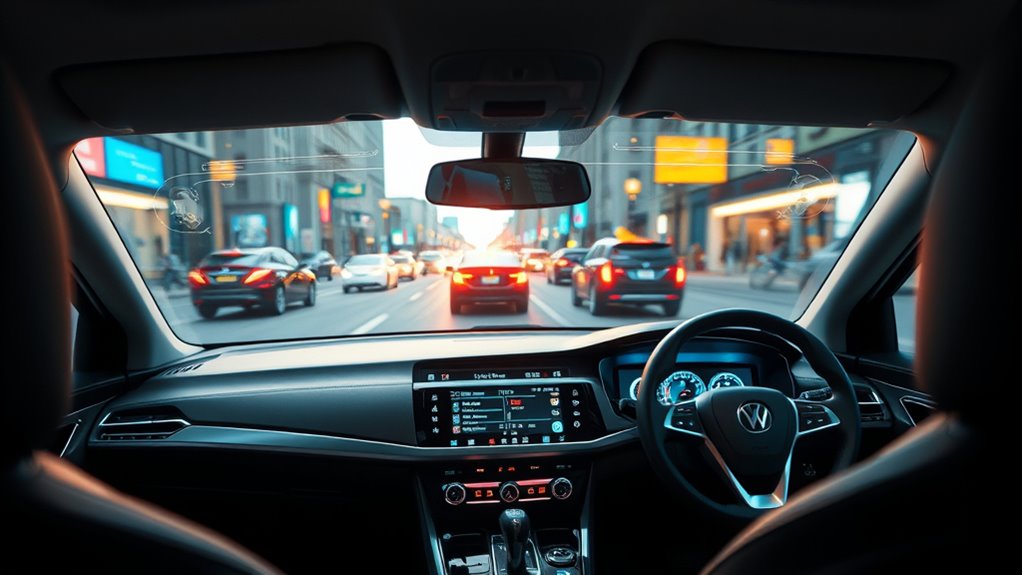
As technology advances, the debate over heads-up displays (HUDs) continues to intensify, with proponents highlighting their potential to improve safety and efficiency, while critics raise concerns about distraction and information overload. When you’re behind the wheel, HUDs project essential information directly onto your windshield, often using augmented reality to overlay navigation, speed, and other data onto your view of the road. This integration aims to keep your eyes on the road rather than darting down to a dashboard or center console. By presenting critical info in your line of sight, HUDs can help you react faster to upcoming turns, hazards, or changes in traffic conditions, potentially reducing reaction times and accidents.
Heads-up displays project vital info onto your windshield, enhancing safety but risking distraction and information overload.
However, as you consider adopting this technology, it’s essential to recognize the risks involved. Augmented reality can make the display seem seamless, but it also introduces a risk of overloading your driver attention. When too much information is layered onto your windshield, it becomes easier to become visually distracted. Instead of simplifying your focus, an overly cluttered HUD can create cognitive overload, causing you to miss important cues or become fixated on less relevant data. This can lead to divided attention, where your focus shifts from the actual road to the digital overlays, increasing the chance of missing critical visual or auditory cues.
Critics argue that while augmented reality HUDs are designed to enhance situational awareness, they can inadvertently distract you from real-world hazards. For example, if the display emphasizes navigation prompts or vehicle diagnostics excessively, it might divert your eyes from pedestrians, cyclists, or unexpected obstacles. The challenge lies in designing HUD interfaces that strike a balance—providing enough information to be helpful without overwhelming or distracting you. Proper customization and adaptive display settings are key to ensuring driver attention remains focused on the road, rather than on an array of digital distractions.
Ultimately, the effectiveness of augmented reality HUDs depends on how well they are integrated into your driving experience. When thoughtfully implemented, they can serve as a valuable safety feature by reducing cognitive load and keeping your attention where it needs to be. But if poorly designed, they risk becoming a source of distraction, undermining their intended safety benefits. As you weigh the convenience of a HUD, remember that your attentiveness remains paramount—technology should assist, not hinder, your ability to drive safely. Additionally, advances in home theatre projectors highlight the importance of high-quality displays that prioritize clarity and minimal distraction, underscoring the need for well-designed interfaces in all visual technology.
As an affiliate, we earn on qualifying purchases.
Frequently Asked Questions
How Do HUDS Impact Long-Term Driver Attention?
HUDs can reduce driver fatigue by decreasing the need to look away from the road, helping you stay focused longer. However, if poorly designed, they add visual clutter, which may distract you and impair long-term attention. Over time, this distraction can cause complacency or decreased awareness, potentially increasing risk. To maximize benefits, make certain your HUD is simple, clear, and minimizes unnecessary information, keeping your attention sharp on the road.
Are There Health Risks Associated With HUD Usage?
Yes, using a HUD can pose health risks like visual strain and cognitive overload. You might experience eye fatigue from focusing on the display, especially during long drives. Additionally, processing the information quickly can overwhelm your cognitive load, leading to mental fatigue. To minimize risks, take regular breaks and adjust the display settings for comfort. Staying aware of these issues helps you drive safely while enjoying the benefits of a HUD.
Do HUDS Improve Safety in All Weather Conditions?
Sure, HUDs seem like a miracle, but they don’t improve safety in all weather conditions. You might think augmented reality features would help in fog or rain, yet they can cause driver fatigue or misinterpretation. Ironically, what’s meant to assist you might distract or mislead you, especially in poor visibility. So, while they’re handy, don’t rely solely on HUDs to keep you safe when weather turns ugly.
What Are the Costs of Installing Advanced HUD Systems?
Installing advanced HUD systems involves significant cost implications, including the price of the technology itself and potential upgrades to your vehicle’s existing systems. You’ll face installation challenges, as professional setup is often necessary to guarantee proper integration with your car’s electronics and safety features. Additionally, ongoing maintenance and calibration can add to the overall expense, making advanced HUD systems a notable investment for drivers seeking enhanced driving experiences.
How Do Different Vehicle Brands Compare in HUD Technology?
You’ll find that vehicle brands like BMW, Mercedes-Benz, and Tesla excel in HUD technology, offering augmented reality features and brightness adjustment for ideal visibility. BMW and Mercedes-Benz focus on seamless integration, while Tesla emphasizes innovative displays for enhanced driver awareness. Each brand varies in clarity, customization, and responsiveness, so you can choose based on your preference for augmented reality overlays, adjustable brightness, and how these features improve your driving experience.
As an affiliate, we earn on qualifying purchases.
Conclusion
Ultimately, whether heads-up displays serve as a helpful tool or a dangerous distraction depends on how you use them. Like a double-edged sword, they can sharpen your awareness or cut into your focus. If you stay attentive and don’t let the display steal your attention, it can be a valuable upgrade. But if you rely on it too much, it might become a wolf in sheep’s clothing, lurking behind the promise of convenience.
As an affiliate, we earn on qualifying purchases.
As an affiliate, we earn on qualifying purchases.
Fall Picks
fall essentials
As an affiliate, we earn on qualifying purchases.