
Say no to dead batteries with smart battery monitors that give you real-time insights into voltage, temperature, and current. These devices detect early warning signs, send alerts, and help you optimize charging cycles, extending your battery’s lifespan. Proper installation, calibration, and maintenance are key to keeping batteries healthy. Want sharper tips on how to maximize your battery’s life and avoid unexpected failures? Keep going for essential advice you can’t afford to miss.
Key Takeaways
- Smart battery monitors provide real-time voltage, current, and temperature data to prevent unexpected battery failures.
- Proper calibration and management of charge cycles extend battery lifespan and ensure accurate health readings.
- Monitoring early voltage fluctuations helps detect capacity loss and avoid dead batteries before they occur.
- Selecting compatible monitors for your battery chemistry enhances measurement accuracy and system reliability.
- Regular maintenance and optimal environment management protect batteries from environmental stressors and prolong their life.

LiTime 500A Smart Shunt, Bluetooth Battery Monitor Range 8V-120V, SOC, Alarm Alerts, History Records, App Monitoring for Lithium, LFP, AGM, Gel Batteries, Ideal for RV/Marine/Solar Home Storage
Bluetooth App Monitoring: The smart shunt pairs with a mobile app, allowing real-time tracking of charge/discharge current, voltage,…
As an affiliate, we earn on qualifying purchases.
As an affiliate, we earn on qualifying purchases.
Understanding How Smart Battery Monitors Work
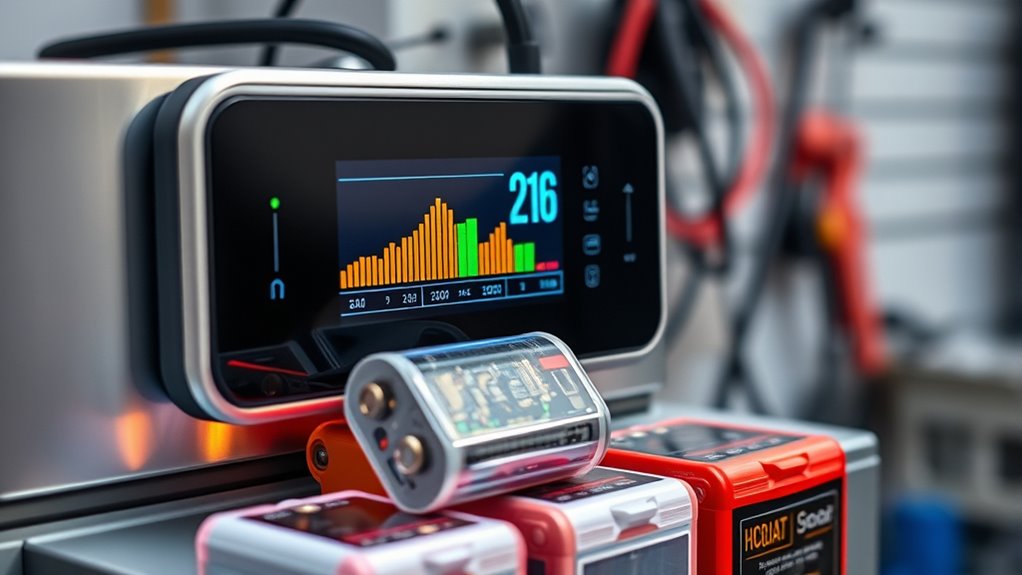
Smart battery monitors work by continuously tracking key parameters like voltage, current, and temperature to assess a battery’s health and remaining capacity. A vital aspect is voltage measurement, which helps determine the state of charge by monitoring the electrical potential across the battery terminals. Different battery chemistries, such as lithium-ion or lead-acid, have unique voltage profiles, so the monitor uses this data to interpret how much energy is left accurately. By understanding the specific voltage ranges associated with each chemistry type, the monitor provides precise readings and alerts you when the battery is nearing depletion or needs maintenance. This real-time monitoring guarantees you’re always aware of your battery’s condition, preventing unexpected failures and extending its lifespan. Proper battery maintenance further enhances performance and longevity, and incorporating advanced sensors can improve the accuracy of these assessments. Utilizing real-time data analysis allows for quicker responses to potential issues. Additionally, selecting compatible batteries ensures that the monitor functions optimally with your energy storage system. Incorporating energy-efficient technology ensures that the monitoring process itself doesn’t significantly drain the battery, maintaining overall system efficiency.

ALMOCN 10-100V Battery Monitor LCD 12V 24V 36V 48V Digital Battery Capacity Voltmeter Tester Percentage Level Voltage Temperature Monitor Meter with Cable
Battery capacity voltage indicators is featured in clear LCD screen with nice performance, which can display battery capacity,…
As an affiliate, we earn on qualifying purchases.
As an affiliate, we earn on qualifying purchases.
Key Features to Look for in a Battery Monitor

When choosing a battery monitor, it’s important to focus on features that guarantee accurate and reliable readings. Look for a device that offers precise measurement of battery capacity, so you know exactly how much energy remains. Voltage accuracy is equally vital; a monitor with high voltage precision ensures you get an exact picture of your battery’s health. This helps prevent over-discharging or unexpected failures. A good monitor should also provide real-time updates and easy-to-understand displays, so you can quickly assess your battery status. Additionally, check for durability and compatibility with your battery type. By prioritizing accurate battery capacity readings and voltage measurement, you’ll guarantee your batteries stay in top shape and avoid dead batteries. Accurate measurement techniques are essential for reliable battery management, especially considering the thermal behavior of batteries during use. Moreover, selecting a monitor with advanced diagnostics can help detect issues early and prolong battery lifespan, reducing the risk of unexpected battery failures. Incorporating proper calibration can further enhance measurement accuracy over time.

UPERFECT Wireless Portable Monitor with Battery 8000mAh, 15.6" 1080P Travel Monitor with Wireless Keyboard/Sleeve/Stand/VESA, External Second Screen for Laptop, PC, Phone, Support AirPlay Miracast
Truly Wireless Display for Work Anywhere: This is a true wireless portable monitor that supports AirPlay and Miracast….
As an affiliate, we earn on qualifying purchases.
As an affiliate, we earn on qualifying purchases.
Benefits of Using a Smart Battery Monitor
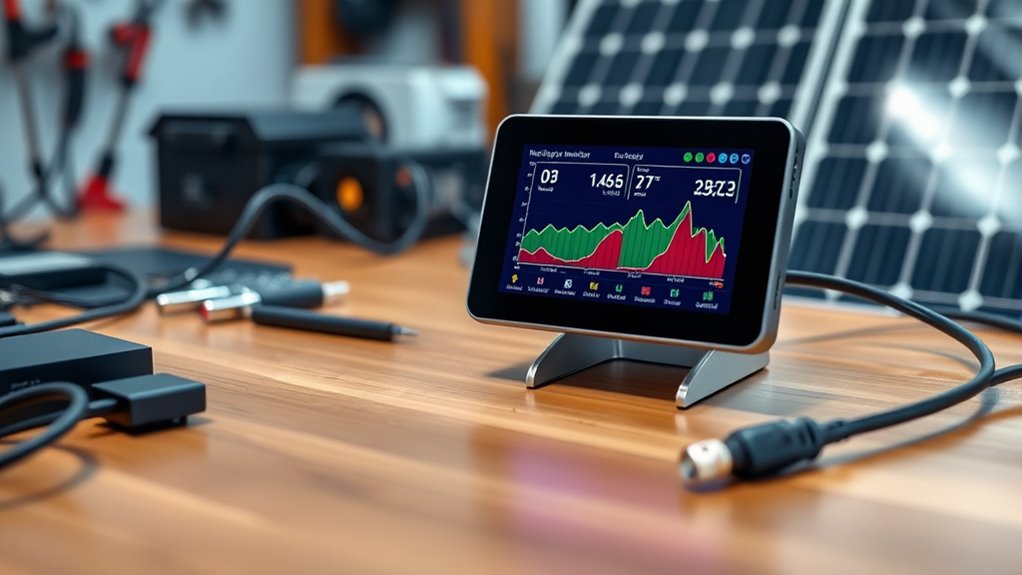
Using a smart battery monitor offers numerous advantages that can substantially enhance your energy management. It provides real-time insights into your battery’s capacity, helping you avoid unexpected dead batteries and optimize usage. With accurate data on remaining charge, you can plan your energy consumption more effectively. Additionally, a smart monitor improves voltage stability by alerting you to fluctuations that could damage your battery or reduce its lifespan. This proactive approach ensures your system runs smoothly and efficiently. You’ll also benefit from automated alerts and data logging, making maintenance easier and preventing costly repairs. Moreover, understanding sound design principles can help you optimize your system’s audio performance and longevity. Incorporating energy efficiency strategies can further maximize your battery’s lifespan and overall system performance. Embracing battery management best practices can lead to more reliable and sustained power sources, giving you greater peace of mind. Utilizing advanced monitoring technology allows you to gain deeper insights into your system’s health and performance. Regularly reviewing your load calculations can help prevent overloads and extend battery life, ensuring your system remains dependable. Overall, a smart battery monitor empowers you to extend battery life, maximize performance, and gain better control over your energy resources.
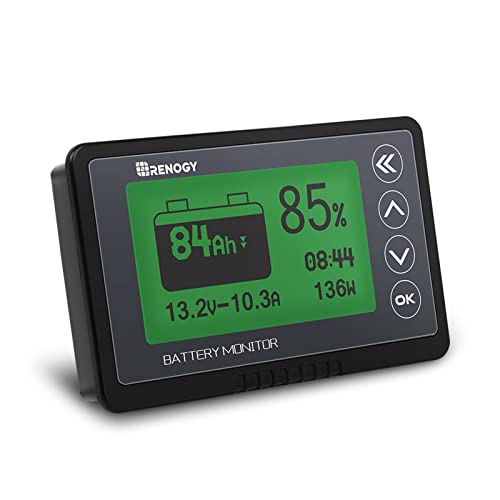
Renogy 500A Battery Monitor with Shunt, High and Low Voltage Programmable Alarm, Range 10V-120V up to 500A, 20ft Shielded Cable, Compatible 12V Lithium Sealed, Gel, Flooded Batteries,Black
1% Accuracy Measurement: Shunt-type battery monitor design provides much more accurate real-time voltage and current draw measurement.
As an affiliate, we earn on qualifying purchases.
As an affiliate, we earn on qualifying purchases.
Installing and Setting Up Your Battery Monitoring System
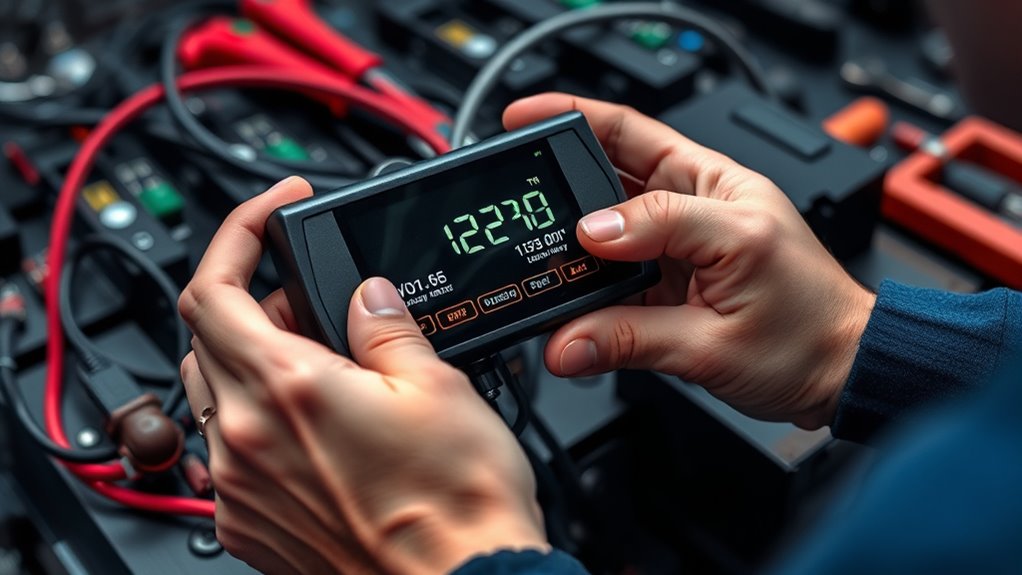
Setting up your battery monitoring system begins with choosing the right location and gathering all necessary tools and components. Confirm the area is dry, well-ventilated, and free from electrical hazards. Before wiring, double-check that your monitor is compatible with your battery type. During installation, prioritize wiring safety by using insulated tools and avoiding loose connections. Once connected, perform battery calibration as recommended by the manufacturer to ensure accurate readings. Proper calibration helps you track your battery’s true capacity and health. Take your time to secure all connections tightly, reducing the risk of shorts or disconnections. Carefully follow the manufacturer’s instructions to avoid errors. Additionally, understanding smart home technology can enhance your ability to integrate the monitor seamlessly into your existing home setup. To optimize your system, consider battery management principles that ensure longevity and safety of your energy storage. Being aware of monitor placement can also improve the accuracy and effectiveness of your readings. Moreover, paying attention to ventilation considerations can prevent overheating and improve overall system safety. Incorporating energy monitoring into your setup can provide comprehensive insights into your home’s power consumption and efficiency.
Tips for Maintaining Battery Health and Longevity
To extend your battery’s lifespan, prioritize regular maintenance habits that keep it operating efficiently. One key tip is performing battery calibration periodically, which guarantees your monitor accurately reflects the true charge level. This involves fully charging the battery, then discharging it completely before charging again. Limiting deep discharge cycles helps prevent excessive wear and tear. Additionally, avoid frequent partial charges; instead, aim for full charge cycles when possible. Keep your battery at ideal temperatures—neither too hot nor too cold—as extreme temperatures accelerate degradation. Regularly monitoring your battery with a smart system can alert you to early signs of capacity loss, allowing you to take timely action. Incorporating sound healing science principles, such as avoiding vibrations and environments that can disrupt battery stability, can also contribute to better health. Maintaining proper battery health through careful management and environment control can significantly extend your battery’s lifespan. Being aware of Vetted – Witbeck Vacuums quality standards can help you select batteries and chargers that meet high safety and performance benchmarks. Understanding battery chemistry and how it influences longevity can further inform your maintenance practices. By practicing proper battery calibration and managing charge cycles, you considerably improve your battery’s health and longevity.
Frequently Asked Questions
Can Smart Battery Monitors Integrate With Existing Home Automation Systems?
Yes, smart battery monitors can integrate with your existing home automation systems. They typically offer broad integration compatibility, allowing you to connect seamlessly with platforms like SmartThings, Home Assistant, or Apple HomeKit. This automation integration enables you to monitor battery health in real-time, receive alerts, and control related devices effortlessly. Make certain to check the specific monitor’s compatibility to guarantee smooth integration with your current setup.
What Is the Typical Lifespan of a Smart Battery Monitor Device?
A typical smart battery monitor lasts around 5 to 10 years, depending on its battery longevity and device durability. You should regularly check its power source and keep it in a protected environment to extend its lifespan. Investing in a high-quality model ensures better durability, so you get the most out of your device. Proper maintenance helps prevent early failures and keeps your energy data accurate and reliable over time.
Are Smart Battery Monitors Compatible With All Battery Types?
Sure, your smart battery monitor might think it’s the king of all batteries, but it’s not quite that universal. While many models boast impressive device versatility, they don’t fit every battery type out there. You need to check for battery compatibility first because some monitors excel with lithium-ion while others handle lead-acid better. So, don’t assume—verify that your device matches your battery’s needs to keep things running smoothly.
How Often Should I Calibrate My Smart Battery Monitor?
You should calibrate your smart battery monitor at least once every three to six months to guarantee ideal monitor accuracy. Regular battery calibration helps keep the monitor’s readings precise, preventing dead batteries or unexpected power loss. If you notice inconsistent readings or unusual behavior, perform calibration sooner. Consistent calibration maintains reliability, ensuring you always have an accurate view of your battery’s health and capacity.
Do Smart Battery Monitors Require Internet Connectivity to Function Properly?
Smart battery monitors generally don’t require constant internet connectivity to function properly. They primarily rely on device compatibility and local data collection to track battery health and performance. However, if your monitor includes features like remote monitoring or cloud updates, internet dependency becomes essential. Without internet, you can still use the core functions, but you might miss out on real-time alerts or software updates.
Conclusion
By choosing the right smart battery monitor, you safeguard your devices, extend battery life, and gain peace of mind. It’s about monitoring, managing, and maximizing your power source—like a vigilant guardian, a reliable guide, and a steadfast protector. With these tools, you prevent dead batteries, preserve energy, and ensure longevity. Embrace smart monitoring, empower your batteries, and keep your devices running smoothly—today, tomorrow, and beyond.