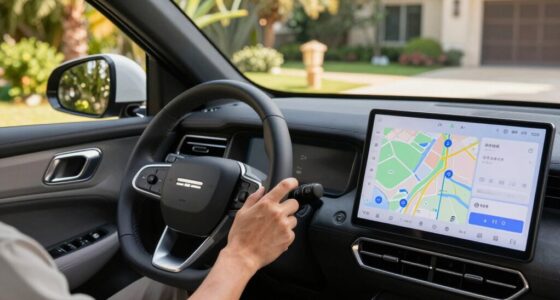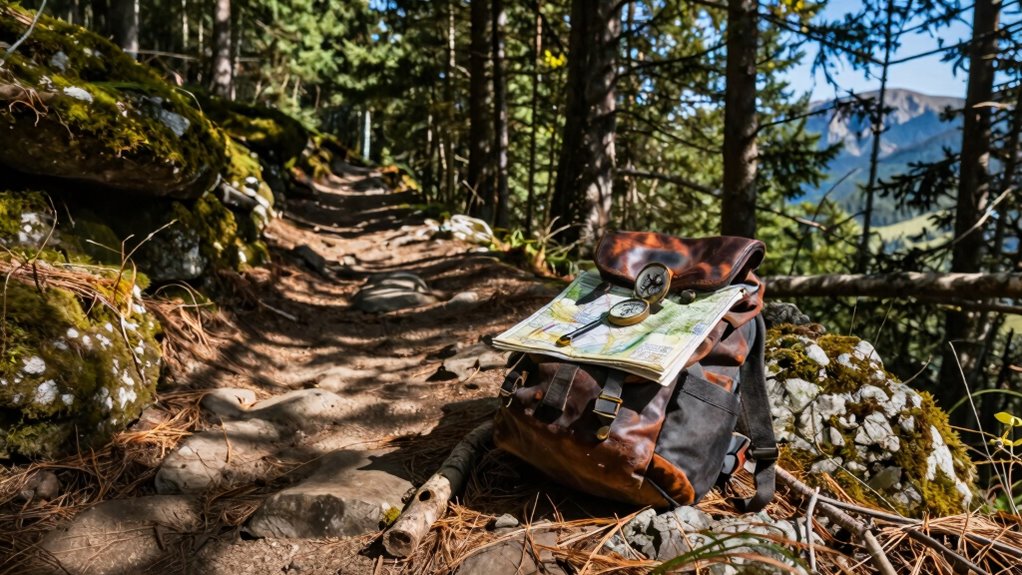

When you go off-grid, relying only on digital tools like GPS or smartphones can leave you stranded if signals drop or devices fail. Environmental factors such as trees, mountains, and weather can block satellite signals, making technology unreliable. To stay safe, you need to develop a navigation mindset that combines traditional skills like map reading, using a compass, and natural cues. Keep exploring, and you’ll discover how blending these methods keeps you confident and adaptive in any terrain.
Key Takeaways
- Off-grid travel often lacks reliable digital signals, requiring reliance on traditional navigation skills and environmental cues.
- Environmental factors can impair satellite and GPS signals, making digital tools less dependable.
- Developing a flexible, resilient mindset ensures effective navigation when technology fails.
- Combining traditional methods with modern tools offers a comprehensive approach for safer off-grid travel.
- Awareness of terrain, landmarks, and natural cues enhances orientation beyond digital dependence.
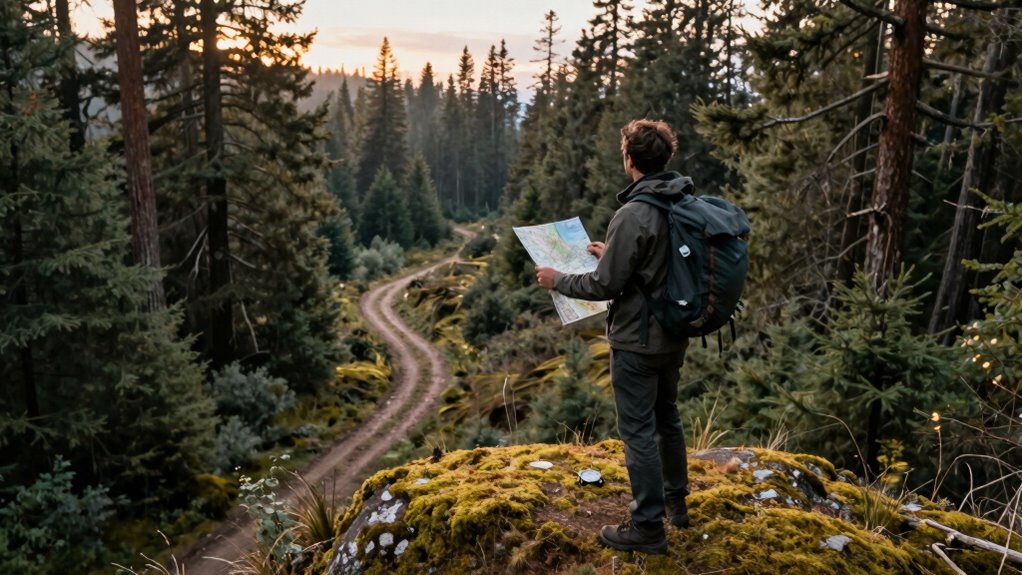
When venturing into remote areas far from cell service and GPS coverage, navigation becomes an essential skill. In these environments, relying solely on digital tools can leave you stranded if technology fails or batteries die. That’s why developing a different navigation mindset is crucial for off-grid travel. You need to combine traditional skills like map literacy with an understanding of satellite technology. While GPS devices and smartphones can be lifesavers in familiar territory, they’re not infallible. Satellite signals can be blocked by dense trees, mountains, or weather, leaving you disconnected. Knowing how to read a physical map and interpret topographical features becomes your anchor when digital options are unavailable.
Relying solely on digital tools risks disconnection; mastering traditional navigation keeps you safe off-grid.
Satellite technology has revolutionized navigation, but it’s not foolproof. You might find yourself in situations where your GPS suddenly stops working, or you lose signal altogether. In those moments, your ability to navigate with a map becomes paramount. Map literacy isn’t just about knowing how to read a map; it’s about understanding the terrain, recognizing landmarks, and using your compass skills to orient yourself. When you’re off-grid, you need to trust your instincts and your knowledge of the landscape rather than depending solely on technology. This means practicing ahead of time, familiarizing yourself with topographic symbols, and learning how to estimate distances and directions accurately. Developing navigation skills ensures you’re better prepared for unexpected situations. Incorporating traditional navigation techniques can also help you build confidence; for example, understanding how to use natural cues like the sun or stars enhances your overall skill set.
Developing a different mindset for off-grid travel also involves embracing patience and adaptability. You can’t expect technology to guide you perfectly through every scenario. You should also recognize that satellite technology can sometimes be affected by environmental factors, making traditional methods even more essential. Prepare by carrying both digital tools and traditional navigation aids. Keep a detailed, up-to-date paper map on hand, and learn how to use a compass effectively. Regularly cross-check your position using natural cues like the sun, stars, and landscape features. This holistic approach helps you build confidence and resilience, ensuring you’re less likely to get lost or frustrated when tech fails. Understanding the limitations of satellite signals and how they can be obstructed by environmental conditions adds an important layer of awareness to your navigation practice.
Ultimately, off-grid navigation demands a shift in mindset—one that values skill, preparation, and resourcefulness over convenience. You must see satellite technology as a helpful supplement, not the sole authority. Cultivating map literacy and understanding your environment allows you to navigate confidently, even when digital tools are out of reach. By blending traditional knowledge with modern technology, you create a robust system that keeps you safe and oriented in the wild. This mindset not only enhances your safety but also deepens your connection with the natural landscape, making your off-grid adventures more rewarding and enriching.

Spec5 Ranger LoRa Meshtastic Device, Keyboard, Touchscreen, Offline US Map
- Off-grid communication: Send messages without cell service
- Integrated GPS and LoRa: Includes GPS, LoRa antenna, and powerful hardware
- Standalone device: No phone or SIM needed for operation
As an affiliate, we earn on qualifying purchases.
As an affiliate, we earn on qualifying purchases.
Frequently Asked Questions
How Do I Find Reliable Navigation Tools for Remote Areas?
To find reliable navigation tools for remote areas, you should carry topographic maps and a compass. Make certain your compass is properly calibrated before your trip. Use maps for detailed terrain understanding and cross-reference with a GPS device, but don’t rely solely on electronic tools. Always have backup options, like a whistle or signaling devices, in case your navigation tools fail. This approach keeps you safe and confident off-grid.
What Skills Are Essential for Off-Grid Navigation?
You need to master map reading and celestial navigation to succeed off-grid. Develop skills to interpret topographic maps and identify landmarks accurately. Practice celestial navigation using the stars, sun, and moon to determine your position when other tools falter. Combining these skills boosts your confidence and independence. Regular practice ensures you’re prepared for unexpected situations, making your off-grid adventures safer and more enjoyable.
How Can I Prevent Getting Lost Without GPS?
Don’t put all your eggs in one basket—rely on landmark recognition and trail marking to stay on track. Keep a close eye on distinctive features like unique trees, rock formations, or streams, and use natural trail markers like cairns or carved sticks. Regularly check your surroundings and leave clear trail marks. Staying vigilant and methodical helps prevent getting lost when GPS fails, turning you into your own navigator.
What Are Alternative Navigation Methods in Emergencies?
In emergencies, you can use celestial navigation by observing the sun, stars, and moon to determine your position. Natural landmarks like mountains, rivers, or distinctive trees help you orient yourself and find your way. Carrying a compass and map is also essential. Learn to read the terrain and use natural cues to stay on course, especially when GPS isn’t available, ensuring you can navigate safely back to safety.
How Do Weather Changes Affect Off-Grid Navigation?
Weather changes considerably impact your off-grid navigation. Sudden shifts in weather patterns, like fog, rain, or storms, can reduce visibility and make landmarks hard to see. These navigation challenges force you to rely more on tools like a compass, GPS, or celestial navigation, rather than visual cues. Always check weather forecasts beforehand, and be prepared for unpredictable conditions to stay safe and maintain your course.

Yeaqee 8 Pcs Land Navigation Kit Includes 5 Military Map Markers Lensatic Military Compass Coordinate Scale and Protractor Pace Beads Counter for Camping, Mountaineering, Climbing, Adventure
- Durable Metal Compass: Waterproof with luminescent arrow for night use
- Colorful Map Markers: Four dual-tip markers for quick notes
- Beads Distance Counter: 16-inch black beads for distance tracking
As an affiliate, we earn on qualifying purchases.
As an affiliate, we earn on qualifying purchases.
Conclusion
Just like Odysseus steering uncharted waters, you must trust your instincts and embrace uncertainty when off-grid. Traditional maps and signals fade into the background, urging you to rely on intuition and a keen sense of the environment. Remember, the journey isn’t just about reaching a destination but mastering the art of adaptation. When you shift your mindset, every twist and turn becomes an adventure—your own epic, written with confidence and curiosity.

Garmin eTrex Solar Powered GPS Handheld Navigator | Unlimited Solar Charging, Bright Screen, Multi-Band GNSS, Digital Compass, Geochaching, for Hiking | with Signature Series Power Bundle
- Bundle Includes: GPS, case, and power bundle
- Easy-to-Read Display: 2.2-inch high-contrast screen
- Bright Sunlight Visibility: Readable in bright sunlight
As an affiliate, we earn on qualifying purchases.
As an affiliate, we earn on qualifying purchases.

Mesqool Emergency Weather Radio NOAA Alert with Battery Backup 12000mAh
- Reliable NOAA/AM/FM Reception: Clear sound with high-sensitivity chip and antenna
- Large Solar Panel for Fast Charging: 8500mm² monocrystalline panel captures more sunlight
- Efficient Hand Crank Power: Larger coil and magnet for quick, effortless charging
As an affiliate, we earn on qualifying purchases.
As an affiliate, we earn on qualifying purchases.