
When doing DIY diagnostics, focus on gathering concrete data before jumping to repairs. Use tools like OBD-II scanners to identify error codes and observe symptoms carefully to narrow down causes. Take a systematic approach by verifying each potential issue step-by-step, rather than guessing. Cross-reference your findings with trusted sources, and combine troubleshooting techniques with diagnostic tools for better accuracy. Keep patience and logic in mind—if you want to learn more, you’ll discover how to troubleshoot effectively without unnecessary repairs.

Get business pricing on garage and car supplies
- Business-only prices and quantity discounts
- Tax-exempt purchasing
- Multiple users, one account, clear invoices
Key Takeaways
- Focus on identifying root causes through systematic troubleshooting before considering part replacements.
- Use diagnostic tools like OBD-II scanners to gather accurate error codes and data.
- Cross-reference findings with manuals and online resources to verify potential issues.
- Observe vehicle symptoms carefully and test external factors affecting performance.
- Approach repairs step-by-step, verifying each potential problem to avoid unnecessary replacements.
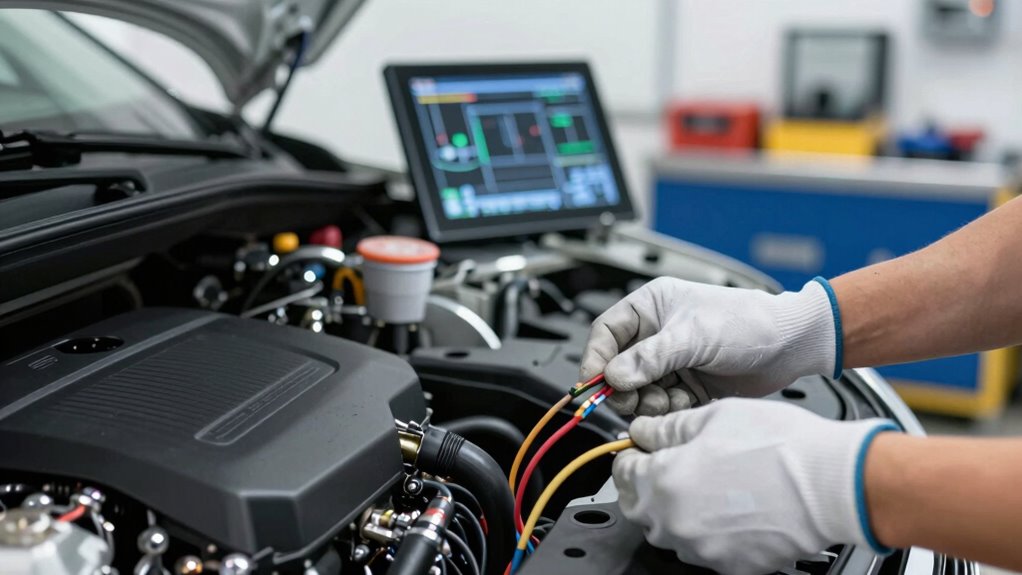
When your vehicle starts acting up, it’s tempting to rush to the repair shop, but sometimes you can diagnose issues yourself without immediately replacing parts. The key is to use the right diagnostic tools and effective troubleshooting methods to pinpoint the problem before committing to costly repairs. Diagnostic tools, like OBD-II scanners, are invaluable for reading error codes stored in your car’s computer. These codes can tell you what systems are experiencing issues without guesswork, saving you time and money. Simply plug in the scanner, follow the instructions, and review the code data to get a clearer idea of what’s wrong. This approach helps you avoid unnecessary replacements by giving you concrete information about the root cause.
Using diagnostic tools like OBD-II scanners helps identify issues accurately, saving time and avoiding unnecessary repairs.
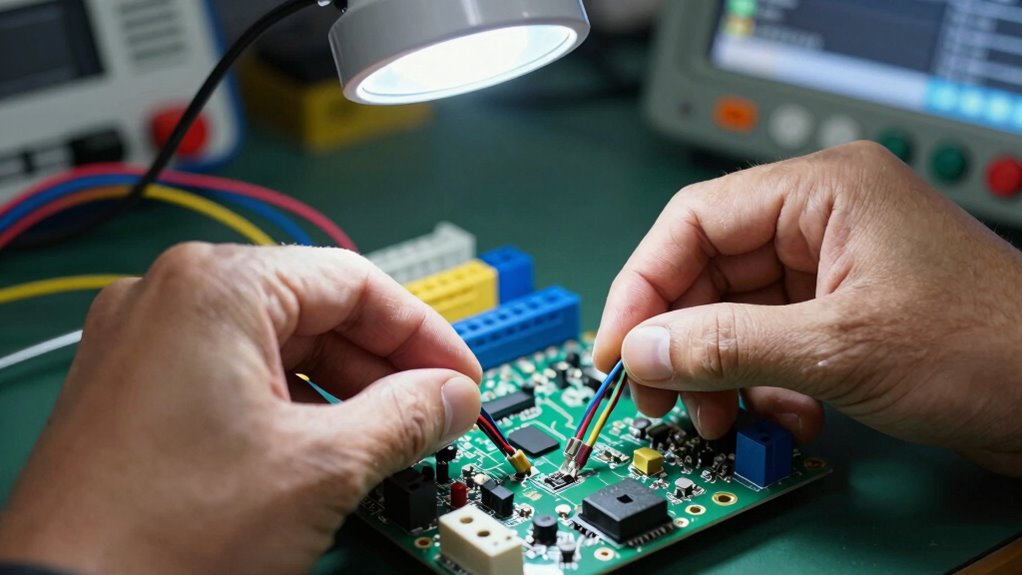
Troubleshooting methods are equally important in DIY diagnostics. Start by observing the symptoms carefully—note when the problem occurs, any sounds or smells, and how the vehicle responds. This information narrows down potential causes and guides your diagnostic approach. For example, if your engine stalls at idle, it could be related to the fuel system or air intake, but if it struggles during acceleration, the issue might be with the ignition or transmission. Use basic testing techniques, like checking fluid levels, inspecting belts and hoses, or listening for unusual noises, to gather more clues. These simple steps can often reveal obvious issues that don’t require complex tools or repairs. Incorporating landscaping can also help in assessing external factors that might influence vehicle performance, such as debris obstructing air intakes. Additionally, understanding the importance of contrast ratio can help in recognizing symptoms related to electrical or sensor issues affecting engine performance.
When troubleshooting, it’s important to stay methodical. Don’t jump to conclusions based solely on initial impressions. Cross-reference your findings with online forums, repair manuals, or trusted sources to validate your assumptions. Take your time to verify each potential problem step by step, rather than rushing into parts replacement. Remember, many vehicle issues stem from minor problems—like a dirty air filter or loose connection—that can be fixed easily once identified. Recognizing diagnostic tools as part of your toolkit allows for more accurate assessments and efficient repairs. In addition, understanding how microplastics in dust might impact air quality in your vehicle’s interior can help you identify hidden sources of dust and pollutants that could interfere with sensors or compromise air filtration.
While diagnostic tools are powerful, they’re just one part of your DIY toolkit. Combining their use with systematic troubleshooting methods allows you to diagnose accurately without jumping straight to replacements. This approach not only saves money but also deepens your understanding of vehicle mechanics. By staying patient and analytical, you can often resolve common issues yourself, making repairs more manageable and less intimidating. In the end, taking the time to think through problems carefully helps you avoid unnecessary expenses and builds your confidence as a DIY mechanic.
As an affiliate, we earn on qualifying purchases.
Frequently Asked Questions
Can DIY Diagnostics Damage My Vehicle Further?
Yes, DIY diagnostics can potentially damage your vehicle further if you’re not careful. For instance, misinterpreting sensor errors might lead you to replace the wrong parts, which wastes money and time. There’s also a risk of misdiagnosis, causing you to overlook underlying issues. Always guarantee you have proper tools and knowledge, or consult a professional if you’re unsure. This helps prevent accidental damage and ensures accurate diagnostics.
How Accurate Are DIY Diagnostic Tools?
DIY diagnostic tools can be fairly accurate if you consider sensor accuracy and tool calibration. These tools often rely on sensor data, which can vary in precision, so make sure your device is well-calibrated and compatible with your vehicle. Keep in mind that while they’re useful for identifying common issues, they might not catch every problem, so professional diagnostics are still essential for complex or persistent issues.
Should I Avoid Certain Repairs After Diagnostics?
You should definitely avoid certain repairs if your diagnostics suggest complex issues, especially when considering cost implications. Ironically, attempting DIY fixes for critical problems might void warranties, leaving you more vulnerable to costly repairs later. Always weigh the risk of expensive mistakes versus professional help. When in doubt, steer clear of major repairs that could jeopardize your warranty or lead to unforeseen expenses, and consult a professional instead.
How Long Should Diagnostics Take?
Diagnostics usually take between 30 minutes to a few hours, depending on the vehicle and issues. During this time, you might need to perform sensor calibration or software updates to guarantee accurate results. Keep in mind that rushing the process can lead to incomplete diagnostics, so allow enough time for proper testing. If you’re DIY-ing, be patient and follow the manufacturer’s instructions carefully for the best results.
When Is Professional Help Necessary After DIY Diagnostics?
You should seek professional help when your engine troubleshooting or electrical system issues persist after DIY diagnostics. If the problem worsens, the symptoms are unclear, or you’re unsure about interpreting your findings, it’s time to consult an expert. Don’t risk causing further damage or unsafe driving conditions. A professional mechanic can provide accurate diagnostics, safe repairs, and peace of mind, especially when dealing with complex engine or electrical system problems.
As an affiliate, we earn on qualifying purchases.
Conclusion
Think of DIY diagnostics like steering a ship through fog—you need to trust your instruments but also rely on your intuition. When I first started tinkering, I once chased a false lead that wasted hours, only to find a simple loose wire. Remember, accurate diagnostics guide your repairs, saving time and money. Use tools wisely, stay curious, and don’t be afraid to ask for help—your vehicle’s health depends on it.
As an affiliate, we earn on qualifying purchases.
As an affiliate, we earn on qualifying purchases.
Columbus Day / Indigenous Peoples' Day Picks
long weekend sales
As an affiliate, we earn on qualifying purchases.