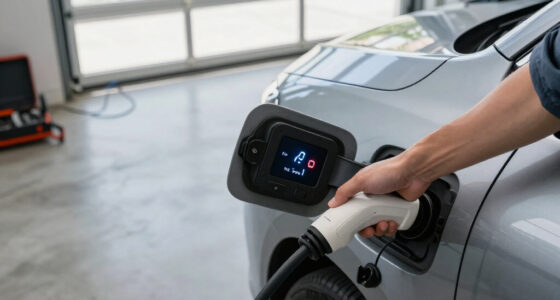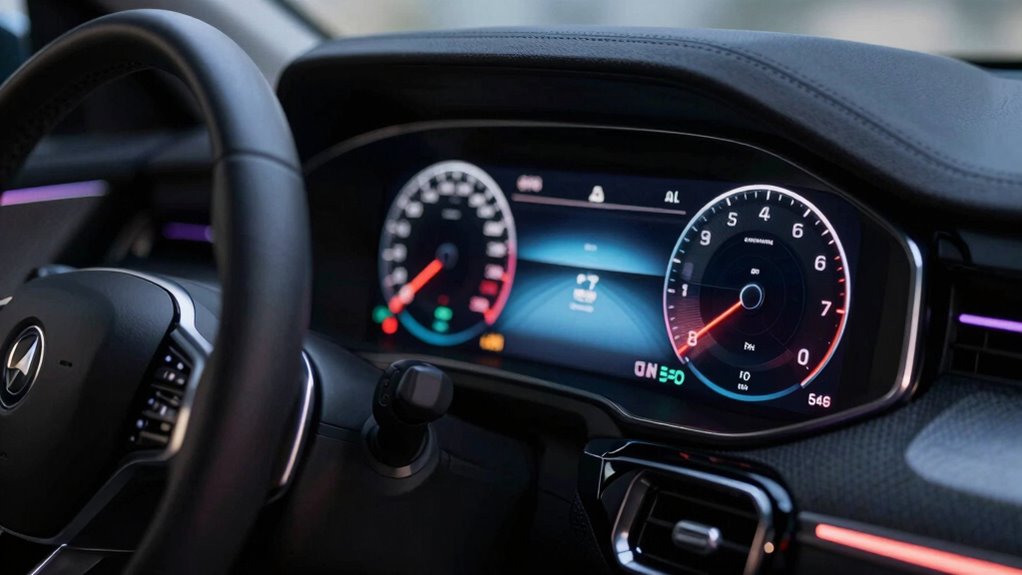

Modern car tech can give you helpful insights into your vehicle’s health by monitoring engine performance, brake wear, and fluid levels. It can predict potential issues before they happen through sensor data, but it’s not foolproof—sensor errors can cause false alarms or missed problems. Warranty info shows past trouble spots but doesn’t guarantee future reliability. To get a complete picture, it’s best to combine tech with regular inspections. Keep going to discover how to use these tools effectively.

Get business pricing on garage and car supplies
- Business-only prices and quantity discounts
- Tax-exempt purchasing
- Multiple users, one account, clear invoices
Key Takeaways
- Car monitoring systems can predict potential issues but are limited by sensor accuracy and environmental factors.
- Warranty data reveals past reliability but cannot guarantee future vehicle performance.
- Predictive maintenance offers educated guesses, not certainties, about vehicle health.
- Regular inspections and driver observations are essential complements to technological insights.
- Combining multiple data sources provides a more comprehensive and reliable assessment of vehicle reliability.
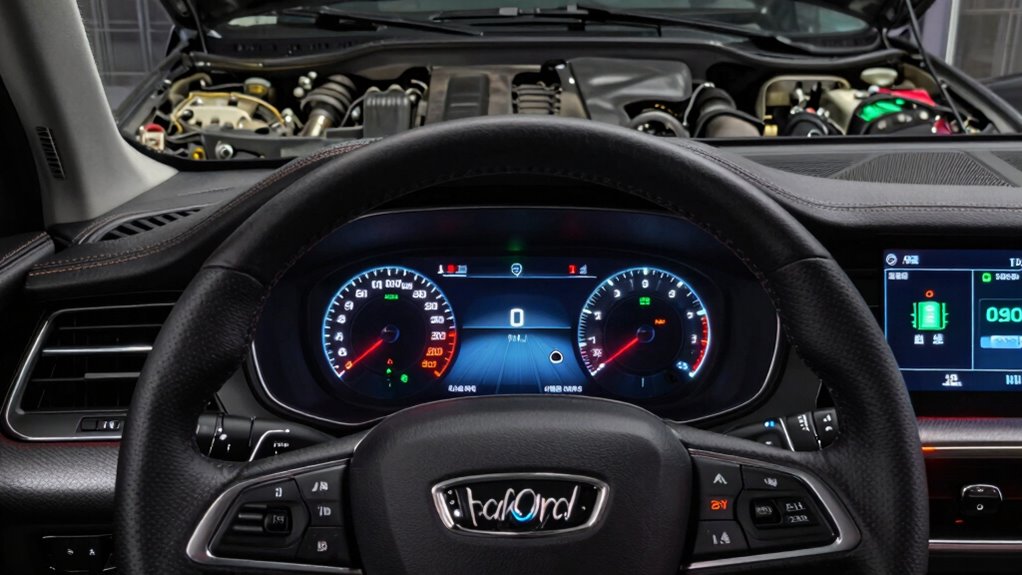
Ever wonder how much you can really depend on car technology to tell you about a vehicle’s dependability? Modern cars are equipped with a range of systems designed to monitor their health and alert you to problems before they become serious. Features like predictive maintenance aim to forecast issues based on data collected from sensors, helping you schedule repairs proactively. These systems analyze patterns in engine performance, brake wear, fluid levels, and other parameters to predict when parts might fail or need servicing. While this sounds helpful, keep in mind that predictive maintenance isn’t infallible. It offers an educated guess based on current data, but it can’t foresee every problem. Sometimes, a sensor might misread or miss an issue altogether, leading to false alarms or overlooked repairs. So, while predictive maintenance can improve your vehicle’s reliability by catching issues early, it shouldn’t replace regular inspections or your intuition about how your car feels and sounds. Additionally, environmental factors can influence sensor accuracy, further complicating predictions.
Warranty analysis is another technological feature that can shed light on your vehicle’s dependability. Many newer cars and service centers keep detailed records of warranty claims, repairs, and maintenance history. This data can indicate recurring issues or persistent weaknesses in certain models or components. If your vehicle has a history of frequent warranty claims related to the engine or transmission, it’s a sign that those parts might be less reliable over time. However, warranty analysis has its limits. It tends to focus on past problems rather than predicting future failures. Just because a car has had issues in the past doesn’t mean it’ll continue to do so. Conversely, a vehicle with no warranty claims isn’t necessarily immune to future problems. It’s useful for understanding historical reliability, but it shouldn’t be the sole factor in evaluating a vehicle’s dependability. Recognizing the importance of reliability indicators can help you make more informed decisions about your vehicle’s overall dependability.
As an affiliate, we earn on qualifying purchases.
Frequently Asked Questions
Can Car Tech Predict Future Mechanical Failures Accurately?
Car tech can’t predict future mechanical failures with complete accuracy. While predictive algorithms analyze sensor data to identify potential issues, their accuracy depends on sensor quality and data quality. You might get early warnings, but false positives or missed problems can occur. Relying solely on this tech isn’t enough; regular maintenance and inspections remain essential to guarantee your vehicle’s reliability and safety.
How Does Car Tech Handle Data Privacy Concerns?
You might worry about your data privacy, but car tech handles it carefully. It uses data encryption to secure your information and only collects data with your user consent. Manufacturers prioritize your privacy, ensuring your personal details aren’t shared without permission. So, while your car gathers useful info, it respects your privacy, giving you peace of mind that your data stays protected and confidential at all times.
Are There Differences in Reliability Data Between Brands?
Yes, there are differences in reliability data between brands. Your best resource is checking brand reputation and consumer reviews, which reveal real-world experiences. Some brands consistently receive positive feedback for durability, while others may struggle with specific issues. Keep in mind, reliability can vary between models within a brand, so consider both overall brand reputation and individual reviews when making your decision.
Can Tech Assess Long-Term Durability Beyond Initial Reports?
Yes, car tech can help assess long-term durability beyond initial reports by analyzing sensor calibration data and user feedback over time. You can track how sensors perform after extended use, revealing signs of wear or failure. Additionally, user feedback provides insights into real-world reliability, highlighting recurring issues that might not appear in early reports. This ongoing data helps you make more informed decisions about a vehicle’s long-term durability.
How Often Should Car Tech Systems Be Updated for Accuracy?
You should update your car tech systems regularly, ideally every few months, to guarantee accuracy. Frequent updates help fix software glitches and improve system performance. Manufacturers often release updates to refine features and address issues, so staying current minimizes errors and enhances reliability. Keep an eye on manufacturer notifications or visit their websites for the recommended update frequency, making sure your vehicle’s tech functions effectively and stays reliable over time.
As an affiliate, we earn on qualifying purchases.
Conclusion
While car tech offers valuable insights into a vehicle’s health, it’s only part of the story. Don’t let the glowing dashboard lights fool you—sometimes what’s unseen is what truly matters. Remember, technology is a guide, not a crystal ball. Trust your instincts, regular maintenance, and a keen eye. After all, even the most advanced tools can’t predict every twist in the road ahead, making your judgment the ultimate compass.
As an affiliate, we earn on qualifying purchases.
predictive maintenance car system
As an affiliate, we earn on qualifying purchases.
As an affiliate, we earn on qualifying purchases.
Fall Picks
fall essentials
As an affiliate, we earn on qualifying purchases.