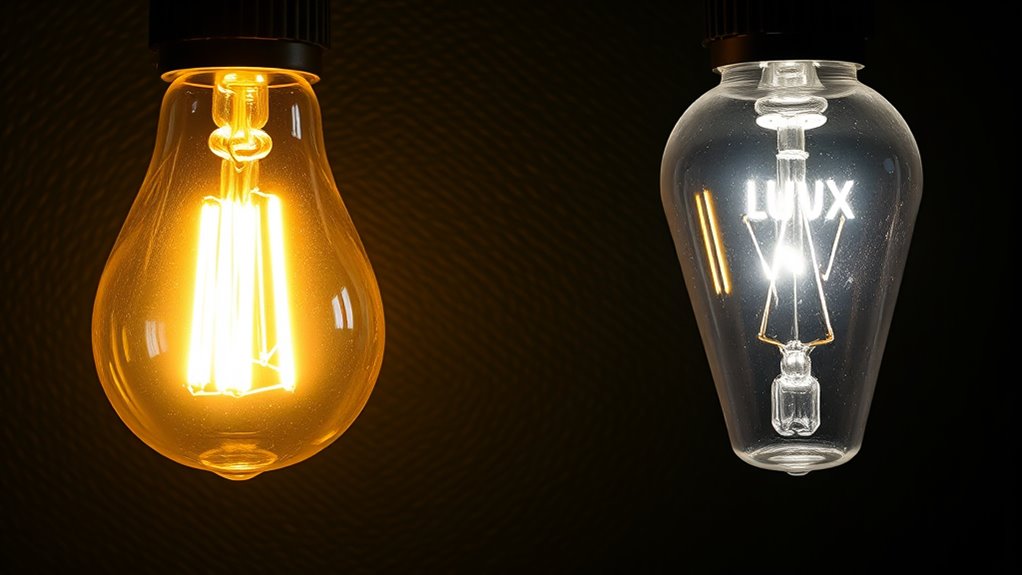

Lumens measure the total visible light a bulb emits, showing how bright it is overall, while lux indicates how that light is distributed over a specific area, revealing illumination intensity. When upgrading your lighting, understanding both helps you select bulbs that provide the right brightness and even coverage. Balancing lumens and lux ensures efficient and effective lighting. Keep exploring to learn how to optimize your space lighting with these ratings.

Get business pricing on garage and car supplies
- Business-only prices and quantity discounts
- Tax-exempt purchasing
- Multiple users, one account, clear invoices
Key Takeaways
- Lumens measure the total light output of a bulb, indicating its overall brightness.
- Lux quantifies how light is distributed over a specific area, showing illumination intensity per unit area.
- When upgrading lighting, consider lumens for brightness and lux for even light coverage across the space.
- Matching lumen output with appropriate lux levels ensures effective and efficient lighting design.
- Both measurements help select bulbs that provide the desired brightness and ambiance for your space.
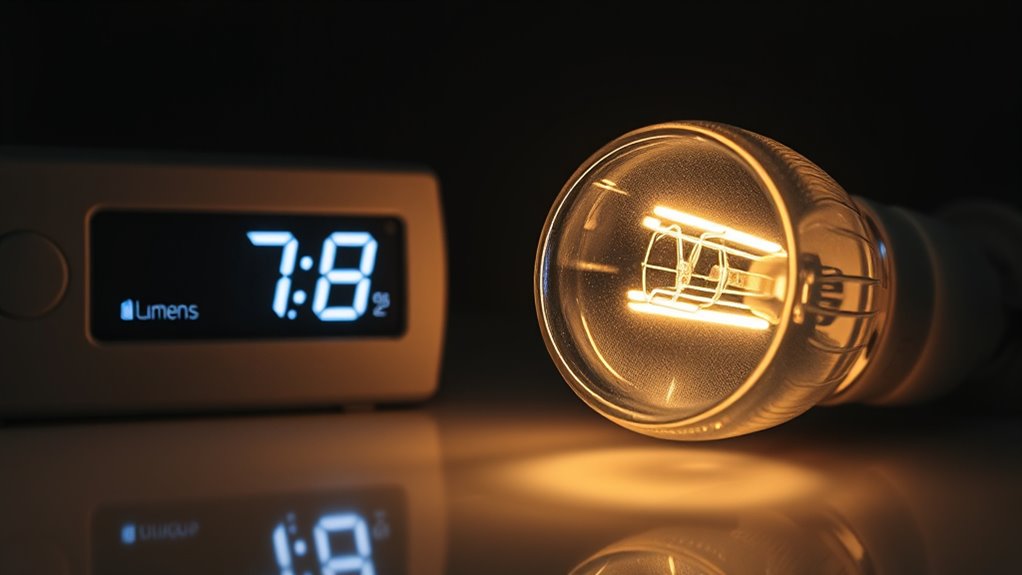
When choosing lighting solutions, understanding the difference between lumens and lux is vital, because they measure different aspects of light. Lumens indicate how much light a bulb produces, while lux measures how that light is distributed over a specific area. Grasping this distinction helps you select the right bulbs for your space, guaranteeing maximum brightness without wasting energy. For example, if you’re upgrading your living room, knowing the lumen output will tell you how bright the bulb is, but considering lux helps you understand how well that brightness covers the area. It’s also important to consider the color temperature, which affects the ambiance of your space. A bulb with a higher color temperature (like 5000K) emits a cooler, bluish light, suitable for task lighting or workspaces, whereas a lower temperature (around 2700K) produces a warmer, yellowish glow, perfect for relaxing areas. When you’re shopping for bulbs, pay close attention to both lumens and color temperature to create the atmosphere you desire. Additionally, understanding the beam angle of bulbs can influence how light is dispersed and affect the overall illumination in your space.
Energy efficiency plays an essential role in lighting choices. Bulbs that produce the same lumen output can vary considerably in energy consumption. LED bulbs, for example, are highly energy-efficient, providing a high lumen output with minimal power use, making them a smart choice for reducing electricity bills and carbon footprint. By understanding the relationship between lumens and energy efficiency, you can pick bulbs that deliver the brightness you need without excess energy consumption. Furthermore, considering the lux in a space helps you avoid over- or under-lighting, which can lead to unnecessary energy use or insufficient illumination. When you align your choice with both the lumen output and the area’s lux requirements, you maximize energy use and guarantee your space is comfortably lit.
LED light bulbs with high lumens
As an affiliate, we earn on qualifying purchases.
As an affiliate, we earn on qualifying purchases.
Frequently Asked Questions
How Do I Choose Between Lumens and Lux for My Space?
You should choose based on your space’s needs—use lumens to measure brightness for general areas like living rooms or kitchens, and lux for specific tasks like reading or detailed work. Consider color temperature to set the right mood, and opt for energy-efficient bulbs to save costs. This way, you get ideal brightness and atmosphere, ensuring your space is well-lit without wasting energy.
Can Two Bulbs With the Same Lumens Have Different Brightness?
Yes, two bulbs with the same lumens can appear differently bright because of factors like color temperature and bulb lifespan. A higher color temperature (measured in Kelvin) produces a cooler, bluer light, making it seem brighter, while a warmer temperature appears softer. Additionally, bulb lifespan influences brightness; older bulbs tend to dim over time. So, consider these factors when choosing bulbs to guarantee consistent brightness in your space.
What Is the Best Way to Measure Lux at Home?
To measure lux at home, you should use measuring tools like a light meter. First, confirm your light meter is calibrated correctly. Then, position the meter’s sensor where you want to measure brightness, keeping it steady. Use light meter techniques such as taking multiple readings at different times or locations to get accurate results. This approach helps you evaluate the light levels effectively and make informed upgrades.
Do LED Bulbs Have Different Lumen Ratings Than Incandescent?
Think of LED bulbs as the sleek athletes of lighting—they deliver more lumens per watt than incandescent bulbs. Yes, LEDs have different lumen ratings, often providing brighter light for less energy. Compared to incandescent bulbs, which burn through more power for the same brightness, LED efficiency means you get more illumination with fewer lumens. So, when upgrading, look for higher lumen LED bulbs to brighten your space efficiently.
How Does Room Size Impact the Required Lumen or Lux Levels?
Room size directly impacts the lumen or lux levels you need. Larger rooms require higher lumen outputs to make certain of adequate lighting across the entire space. Consider room dimensions and divide your space into lighting zones for targeted illumination. For bigger areas, opt for bulbs with higher lumen ratings and plan for multiple light sources to evenly distribute light, making sure each zone meets recommended lux levels for comfort and functionality.
lux meter for measuring light coverage
As an affiliate, we earn on qualifying purchases.
As an affiliate, we earn on qualifying purchases.
Conclusion
Now that you understand lumens and lux, you can make smarter lighting choices. You know how to compare brightness across bulbs, how to evaluate lighting needs, and how to upgrade your space effectively. You can assess, decide, and install with confidence. Whether it’s for work, relaxation, or security, you’re ready to choose the right brightness level. So, measure, consider, and illuminate — because understanding lighting empowers you to create the perfect environment.
As an affiliate, we earn on qualifying purchases.
energy-efficient task lighting bulbs
As an affiliate, we earn on qualifying purchases.
As an affiliate, we earn on qualifying purchases.
Fall Picks
fall essentials
As an affiliate, we earn on qualifying purchases.